





This section focuses on an overview of vanillylacetone (zingerone) as well as its manufacturing processes and uses. Also, please check out the introduction to vanillylacetone zingerone manufacturers, supply chain issues, vanillylacetone zingerone suppliers, and vanillylacetone zingerone prices. Sinofi can help you buy high-quality zingerone in bulk for your industry applications at wholesale prices based on FEMA 3124 and CAS 122-48-5.
Table of Contents
What is Zingerone (Vanillylacetone)?
Zingerone, also known as vanillylacetone, is a fascinating organic compound that plays a crucial role in giving ginger its characteristic taste and aroma. What makes zingerone particularly interesting is how it forms. Zingerone, scientifically known as 4-(4-hydroxy-3-methoxyphenyl)-2-butanone, is not only responsible for ginger’s culinary appeal but also contributes significantly to its medicinal properties that have been valued for centuries. Fresh ginger contains very little zingerone. Instead, it’s rich in gingerols, which are the compounds responsible for ginger’s sharp, pungent bite. When ginger is dried or cooked, these gingerols undergo thermal decomposition and transform into zingerone, which explains why dried ginger has a sweeter, more mellow flavor compared to fresh ginger. Zingerone is characterized by its sweet, spicy aroma with notes reminiscent of vanilla and woody undertones. According to the U.S. Food and Drug Administration (FDA), zingerone is approved to be used in food, flavour and fragrance, pharmaceutical, and cosmetic industries. It has also been evaluated by relevant regulatory authorities like JECFA, RIFM, EUR-Lex, ECHACHEM, NIST, and WHO. The IFRA Transparency List also provides a guideline to ensure the use of zingerone in the food, flavor, and fragrance industries.
CAS No.: 122-48-5
According to the American Chemical Society, the CAS number of zingerone is 122-48-5.
CAS Name: Vanillylacetone
Molecular Formula: C11H14O3
Molecular Mass: 194.23
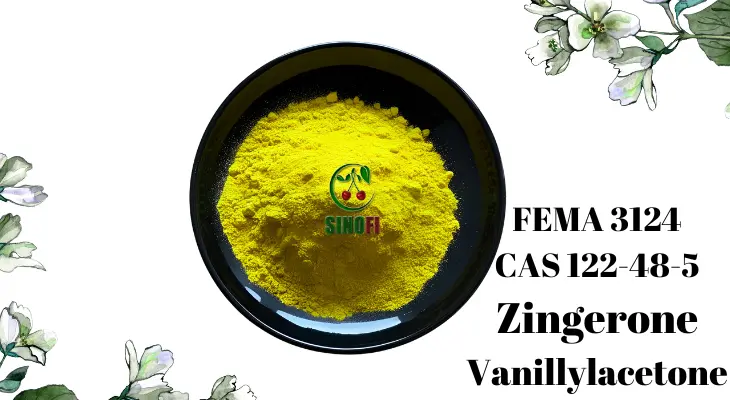
Appearance: Yellow to yellow brown crystalline powder
Solubility: Soluble in alcohols and ethers, slightly soluble in water (3571 mg/L @ 25 °C).
Other Names:
♦ Zingiberone
♦ Zingerone
♦ Gingerone
♦ 4-Hydroxy-3-methoxybenzylacetone
♦ 3-Methoxy-4-hydroxybenzylacetone
Zingerone (Vanillylacetone) Odor
Sweet spicy phenolic ginger vanilla woody.
FEMA Number 3124
According to the Flavor and Extract Manufacturers Association (FEMA), the number of zingerone is FEMA 3124.
Bulk Vanillylacetone (Zingerone) Manufacturers
The bulk zingerone production is characterized by a mix of established zingerone manufacturers and specialized natural extract producers. They employ various production methods, ranging from direct extraction from ginger sources to synthetic production techniques that can ensure consistent quality and supply. Leading zingerone manufacturers like Givaudan typically focus on maintaining high purity levels, often exceeding 98% purity for pharmaceutical and food-grade applications. They also emphasize adherence to international quality standards such as FDA, FEMA, and EU regulations, which are crucial for companies serving global markets.
Sinofi is a bulk zingerone manufacturer in China, and we have a manufacturing facility with 2,500 square meters for zingerone production. We supply high-quality zingerone powder at bulk prices and serve food, flavour and fragrance, pharmaceutical, and cosmetic manufacturers worldwide.
Manufacturing Process of Vanillylacetone (Zingerone)
The manufacturing processes of zingerone include both traditional plant extraction and chemical synthesis.
Natural Extraction Manufacturing Process
Zingerone occurs naturally in ginger (Zingiber officinale), particularly in dried ginger, where it forms through the thermal degradation of gingerols during the drying process. Traditional extraction methods involve steam distillation or solvent extraction from ginger root, but these approaches typically yield low concentrations of zingerone, making them economically challenging for large-scale production.
The natural extraction process begins with the preparation of dried ginger powder, which is then subjected to steam distillation at temperatures around 100°C. The resulting essential oil contains zingerone along with other volatile compounds, requiring further purification through fractional distillation or chromatographic separation. While this method produces naturally derived zingerone, the low yield (typically less than 1% by weight) and seasonal availability of raw materials limit its commercial viability.
Chemical Synthesis Manufacturing Process
Modern zingerone manufacturing relies primarily on chemical synthesis, which offers several advantages, including consistent quality, higher yields, and year-round production capability. The most common synthetic approach involves the Claisen-Schmidt condensation reaction between vanillin and acetone.
The primary synthesis route begins with vanillin (4-hydroxy-3-methoxybenzaldehyde) as the starting material. In the presence of a base catalyst, typically sodium hydroxide or potassium hydroxide, vanillin undergoes an aldol condensation with acetone. This reaction produces an intermediate α,β-unsaturated ketone, which is subsequently reduced to yield zingerone.
Modern zingerone manufacturing increasingly emphasizes environmental sustainability and green chemistry principles. Efforts focus on reducing solvent usage, minimizing waste generation, and improving energy efficiency throughout the production process.
Bulk Vanillylacetone (Zingerone) Suppliers
The global bulk zingerone market is geographically diverse, with major suppliers concentrated in Asia, particularly India and China, where ginger cultivation is abundant. Chinese zingerone suppliers often leverage their proximity to premium ginger sources and traditional extraction knowledge. Top European zingerone suppliers like Givaudan specialize in high-purity grades and customized formulations. They frequently cater to pharmaceutical and high-end cosmetic applications where stringent quality standards are paramount.
Sinofi is a bulk zingerone supplier in China, and we have a warehouse with 1,200 square meters for high-quality vanillylacetone. We sell different grades of zingerone at wholesale prices to food, flavour and fragrance, pharmaceutical, and cosmetic manufacturers.
Supply Chain of Vanillylacetone (Zingerone)
The zingerone supply chain represents a complex network connecting ginger farmers to end-users across diverse industries.
Raw Material Supply
Ginger Cultivation
The zingerone supply chain begins with ginger cultivation, primarily concentrated in specific geographic regions where climate and soil conditions are optimal. The major ginger-producing countries include:
China leads global production, contributing approximately 40% of the world’s ginger supply. Chinese ginger farms, particularly in Shandong, Henan, and Anhui provinces, form the backbone of the global zingerone supply chain.
India ranks second, with cultivation concentrated in Kerala, Karnataka, and Odisha. Indian ginger varieties often have higher zingerone potential due to specific cultivars and traditional processing methods.
Other notable producers include Thailand, Indonesia, Nepal, and Peru, each contributing unique varieties and processing techniques to the global supply chain.
Supply Chain Structure
Primary Processing
The first transformation stage occurs close to cultivation sites, where fresh ginger undergoes initial processing:
- Drying Operations: Traditional sun-drying or modern controlled-environment drying converts gingerol to zingerone. This stage is critical as improper drying can significantly reduce zingerone yields.
- Steam Distillation: Some facilities extract essential oils containing zingerone directly from fresh or dried ginger through steam distillation processes.
- Quality Control: Initial screening for moisture content, oil percentage, and preliminary zingerone analysis occurs at this stage.
Secondary Processing and Extraction
Specialized extraction facilities represent the second tier of the supply chain:
- Solvent Extraction: Industrial facilities use various solvents to extract zingerone-rich oleoresins from dried ginger. These operations require sophisticated equipment and expertise in extraction chemistry.
- Purification: Advanced facilities employ techniques like chromatography, crystallization, and fractional distillation to produce high-purity zingerone for pharmaceutical and premium applications.
- Standardization: Processors blend different batches to achieve consistent zingerone concentrations meeting specific industry requirements.
Distribution and Trading
The intermediate distribution network includes:
- Commodity Traders: Large trading houses that manage bulk quantities and provide market liquidity. These entities often maintain strategic stockpiles to manage seasonal supply variations.
- Specialized Distributors: Companies focusing on natural aromatic compounds and flavoring ingredients. They typically offer technical support and customized solutions to end-users.
- Regional Distributors: Local entities that serve specific geographic markets and provide last-mile distribution services.
End-User Industries
The final tier encompasses diverse industries utilizing zingerone:
- Food and Beverage: The largest consumer segment, using zingerone in spice blends, baked goods, beverages, and confectionery products.
- Pharmaceutical: Manufacturers are incorporating zingerone for its potential anti-inflammatory, antioxidant, and digestive properties.
- Cosmetics and Personal Care: Companies utilize zingerone’s aromatic properties in perfumes, soaps, and skincare products.
- Research and Development: Academic and industrial laboratories studying zingerone’s properties and developing new applications.
Success in this market requires understanding the intricate relationships between agricultural production, processing technologies, quality requirements, and market dynamics. As demand for natural compounds continues growing, the zingerone supply chain will likely become more sophisticated, with increased emphasis on sustainability, traceability, and technological innovation.
Wholesale and Buy Zingerone in Bulk
Wholesale purchasing of zingerone offers significant opportunities for buyers across various industries to access this valuable natural compound cost-effectively. Success in bulk procurement requires careful attention to quality specifications, supplier selection, regulatory compliance, and storage protocols. As the market for natural ingredients continues to grow, reliable wholesale relationships can provide competitive advantages and support business growth. By considering all these factors, zingerone buyers can successfully integrate vanillylacetone into their operations while maintaining quality standards and cost efficiency.
Benefits of Buying Zingerone in Bulk
- Purchasing zingerone in wholesale quantities offers several advantages for businesses. Cost efficiency represents the primary benefit, as bulk purchasing typically results in significant per-unit savings compared to smaller quantities. This pricing advantage allows companies to maintain competitive product pricing while preserving profit margins.
- Wholesale purchasing also ensures supply chain stability. With adequate inventory levels, businesses can maintain consistent production schedules without worrying about supply disruptions. This is particularly important for companies with high-volume production requirements or those operating in markets where zingerone availability may be limited.
Quality Considerations in Bulk Purchasing
When buying zingerone in bulk, quality assurance becomes paramount. Reputable wholesale suppliers should provide detailed certificates of analysis (COA) that verify the compound’s purity, typically ranging from 95% to 99%. These certificates should include information about moisture content, heavy metals, microbiological contamination, and residual solvents.
As a bulk zingerone manufacturer and supplier in China, we supply high-quality vanillylacetone for food, flavour and fragrance, pharmaceutical, and cosmetic industries. We also wholesale zingerone to small customers. Normally, they want to buy zingerone in small quantities. To serve them, we can wholesale zingerone at bulk prices and provide a one-stop purchasing service.
Vanillylacetone (Zingerone) Prices (USD/Kg)
Food Grade Vanillylacetone (Zingerone) Prices (Purity: >=98%)
| Volume | Unit Price | Shipment |
| 50g | 49 USD | Express |
| 500g | 245 USD | Express |
| 1Kg | 350 USD/Kg | Express |
| 20Kg | 20% cheaper | Express |
| 100Kg-Above | negotiable | Express / Sea |
Zingerone prices have shown considerable variation during the past two years, depending on purity levels, extraction methods, and market demand. High-purity zingerone (98% or above) typically commands premium prices, while lower-grade variants are more affordable for bulk applications. The price differential between synthetic and naturally-extracted zingerone has narrowed in recent years as synthetic production methods have become more efficient.
Factors Influencing Zingerone Prices
Zingerone pricing reflects the complex interplay between agricultural supply chains, technological advancement, regulatory requirements, and evolving consumer preferences.
Raw Material Availability
Ginger crop yields significantly impact zingerone prices since natural extraction remains the primary production method. Weather conditions in major ginger-producing regions like India, China, and Nigeria directly affect supply chains and pricing structures.
Processing Costs
The extraction and purification of zingerone require sophisticated equipment and energy-intensive processes. Rising energy costs and technological investments in extraction facilities influence the final product pricing.
Regulatory Environment
Increasing regulatory scrutiny in food and pharmaceutical applications has led to higher quality standards, driving up production costs for certified zingerone products. Compliance with international standards such as FDA and EU regulations adds to the overall cost structure.
Furthermore, the above zingerone price quotations, especially for small orders, do not include the express shipping fee. The reason is that the shipment cost of zingerone may exceed the value of the sample. However, the bulk wholesale zingerone prices will be much lower than those of small orders. Please contact us for more details.
Vanillylacetone (Zingerone) Uses
Food and Beverage Uses
In the food industry, zingerone serves multiple purposes. It’s used as a flavoring agent to impart ginger-like notes to various products, including baked goods, confectionery, and beverages. Additionally, its antimicrobial and antioxidant properties make it valuable as a natural preservative, helping to extend shelf life while maintaining food safety standards.
Cosmetics and Personal Care Uses
The cosmetic industry has embraced zingerone for its antioxidant and anti-inflammatory properties. It’s incorporated into skincare products aimed at reducing signs of aging, soothing irritated skin, and protecting against environmental damage. Some hair care products also utilize zingerone for its potential to promote scalp health and hair growth.
Pharmaceutical Uses
Pharmaceutical companies are increasingly interested in zingerone as an active ingredient in various formulations. Its anti-inflammatory and analgesic properties make it suitable for developing topical pain relief products. Additionally, oral supplements containing zingerone are being developed to harness its systemic health benefits.
Research and Development Uses
Zingerone continues to be a subject of extensive research, with scientists exploring its potential in cancer therapy, diabetes management, and cardiovascular health. Its relatively low toxicity profile and natural origin make it an attractive candidate for drug development and functional food formulations.
Safety and Considerations
Generally recognized as safe (GRAS) by the FDA when used in food applications, zingerone has a good safety profile. However, as with any bioactive compound, appropriate dosing and quality control are essential. Pregnant and breastfeeding women, as well as individuals with certain medical conditions, should consult healthcare providers before using zingerone supplements.
Vanillylacetone (Zingerone) Benefits
Anti-inflammatory Benefits
One of zingerone’s most notable therapeutic applications lies in its potent anti-inflammatory effects. Research has demonstrated that zingerone can help reduce inflammation by inhibiting the production of pro-inflammatory mediators such as tumor necrosis factor-alpha (TNF-α) and interleukin-6 (IL-6). This makes it valuable for managing conditions characterized by chronic inflammation, including arthritis and inflammatory bowel diseases.
Antioxidant Benefits
Zingerone exhibits strong antioxidant properties, helping to neutralize harmful free radicals in the body. This antioxidant activity may contribute to reducing oxidative stress, which is implicated in aging and various chronic diseases, including cardiovascular disease and cancer. The compound’s ability to scavenge free radicals makes it a potential candidate for developing nutraceuticals aimed at promoting overall health and longevity.
Gastrointestinal Benefits
Following in ginger’s traditional use for digestive issues, zingerone has shown promise in supporting gastrointestinal health. Studies suggest it may help alleviate nausea, reduce gastric inflammation, and promote healthy digestion. These properties make zingerone particularly interesting for developing treatments for motion sickness, morning sickness during pregnancy, and chemotherapy-induced nausea.
Neuroprotective Benefits
Emerging research indicates that zingerone may possess neuroprotective properties. Some studies have suggested it could help protect brain cells from damage and potentially slow the progression of neurodegenerative diseases such as Alzheimer’s and Parkinson’s disease. However, more research is needed to fully understand these effects in human subjects.
Antimicrobial Benefits
Zingerone has demonstrated antimicrobial properties against various bacteria and fungi. This characteristic makes it useful as a natural preservative in food products and as a potential therapeutic agent for treating certain infections. Its antimicrobial action is particularly effective against foodborne pathogens, making it valuable in food safety applications.
Vanillylacetone (Zingerone) Used in Pharmaceutical
Zingerone Used in Cancer Treatment
Drugs containing zingerone can inhibit the activation of cancer-associated fibroblasts (CAFs) and extracellular matrix remodeling in subcutaneous tumors of colorectal cancer (CRC), thereby inhibiting the occurrence, development, and metastasis of tumors. This indicates that zingerone is an auxiliary drug against CRC, which can inhibit the development of CRC and improve the survival of patients.
In conclusion, zingerone represents a perfect example of how heat and processing can transform a plant compound, creating new flavors and potentially enhancing health benefits. From its origins in ginger to its current applications across diverse industries, this versatile compound continues to demonstrate its value as both a therapeutic agent and commercial ingredient. As a bulk zingerone manufacturer and supplier in China, we sell different grades of zingerone at wholesale prices to large manufacturers and small customers worldwide.