




This section provides an overview of resveratrol, covering its manufacturing processes and regulatory status, as well as its applications in the food, nutraceutical, cosmetic, and pharmaceutical industries. Also, please check out the introduction to resveratrol manufacturers, supply chain issues, resveratrol suppliers, and resveratrol prices. Sinofi can help you buy resveratrol at bulk wholesale prices based on CAS 501-36-0.
Table of Contents
What is Resveratrol?
Resveratrol, a naturally occurring stilbenoid polyphenol found in grape skins, berries, peanuts, and the root of Japanese knotweed (Polygonum cuspidatum), has become one of the most commercially significant ingredients in the global nutraceutical, cosmetic, and functional food industries. Its association with antioxidant activity, cardiovascular support, and healthy-aging research has sustained strong demand from supplement brands, contract manufacturers, and personal care formulators. Resveratrol is increasingly formulated within longevity-oriented ingredient stacks alongside NMN, NAD+ precursors, and coenzyme Q10, a trend that broadens demand but also raises expectations for pharmaceutical-grade documentation. Resveratrol consists of two phenolic rings connected by an ethylene bridge, and it exists as two geometric isomers: the trans form and the cis form. The trans isomer is the thermodynamically more stable configuration, the predominant form in nature, and the isomer responsible for essentially all of the biological activity attributed to the ingredient. Commercial specifications therefore focus on trans-resveratrol content, and CAS 501-36-0 refers specifically to this trans form. According to the U.S. Food and Drug Administration (FDA), resveratrol has been approved to be sold legally as an unregulated dietary supplement, but FDA has not approved resveratrol to treat, cure, or prevent any disease.
Regulatory Status and Safety Considerations
Resveratrol has been evaluated by major regulatory bodies like EFSA, Food Standards Agency, NIEHS, ECHACHEM, NIST, CosIng, and National Toxicology Program. In the European Union, trans-resveratrol is a regulated novel food. Commission Implementing Decision (EU) 2016/1190 authorized placement on the market of trans-resveratrol as a novel food ingredient for use in food supplements in capsule or tablet form, for the adult population only, at a maximum dose of 150 mg per day, and required labeling to state that persons taking medicines should consume the product only under medical supervision. The underlying EFSA opinion assessed synthetic trans-resveratrol of purity not less than 99 percent by weight and concluded that an intake of 150 mg per day for adults did not raise safety concerns. The authorization was subsequently carried into the Union list of novel foods under Implementing Regulation (EU) 2017/2470, with conditions of use amended by Implementing Regulation (EU) 2021/51 and specifications for trans-resveratrol from microbial source addressed by Implementing Regulation (EU) 2022/672. Manufacturers should note that the specification attached to the Union list entry is legally binding on material placed on the EU market, and that it differs according to production route; the current consolidated text should always be verified directly, since novel food entries are amended periodically. In the United States, trans-resveratrol is supplied as a dietary ingredient, with new dietary ingredient notifications and self-affirmed or notified GRAS determinations underpinning specific grades and sources. Requirements differ materially between jurisdictions and between food, cosmetic, and pharmaceutical applications, and the applicable framework should be confirmed for the intended market before a route is fixed.
Resveratrol enjoys a favorable safety record in both application areas. As a food ingredient in dietary supplements, resveratrol is well tolerated at customary supplement doses, with gastrointestinal discomfort reported only at doses far exceeding typical use levels. As a cosmetic ingredient, it exhibits low irritation and sensitization potential at cosmetic concentrations, though standard safety assessment, including patch testing of the finished formula, remains obligatory. In terms of the therapeutic potential of resveratrol, it has clinical trials on cancer, neurological disorders, cardiovascular diseases, diabetes, non-alcoholic fatty liver disease (NAFLD), and obesity.
Natural Sources and Commercial Production
Resveratrol functions in plants as a phytoalexin, a defensive compound synthesized in response to fungal attack, ultraviolet radiation, and other stressors. It occurs naturally in grape skins, red wine, peanuts, blueberries, cranberries, and, most abundantly, in the root of Japanese knotweed (Polygonum cuspidatum, also classified as Reynoutria japonica), which serves as the principal botanical source for commercial extraction.
Mechanisms of Action
Resveratrol’s reputation rests on a broad and well-studied pharmacological profile. As a polyphenol bearing three hydroxyl groups, it is an effective free-radical scavenger and contributes to the protection of lipids and other oxidation-prone components. It has been widely investigated as an activator of sirtuin enzymes, particularly SIRT1, which are associated with cellular longevity pathways; this association underpins much of its anti-aging positioning. Additional documented activities include modulation of inflammatory mediators, inhibition of matrix metalloproteinases implicated in collagen degradation, and inhibition of tyrosinase, the rate-limiting enzyme in melanin synthesis. The last of these supports its use in skin-brightening formulations, while the antioxidant and anti-inflammatory activities support both topical and ingestible applications.
CAS No.: 501-36-0
According to the American Chemical Society, the CAS number of resveratrol is 501-36-0.
CAS Name: Resveratrol
Molecular Formula: C14H12O3
Molecular Mass: 228.24
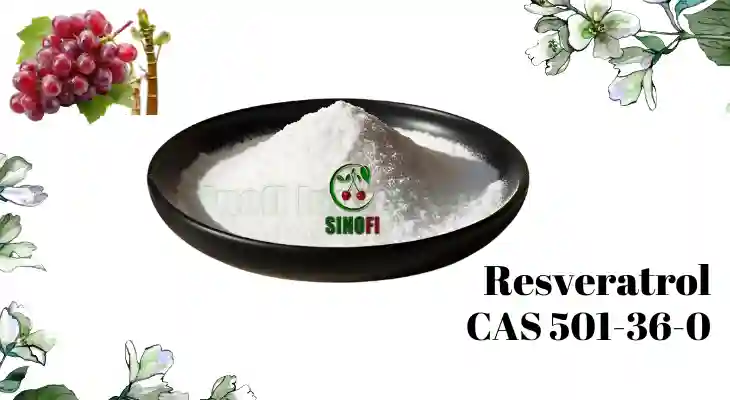
Appearance: White powder.
Boiling Point: 449.00 to 450.00 °C. @ 760.00 mm Hg (est)
Solubility: Soluble in alcohol; insoluble in water.
Other Names:
♦ 1,3-Benzenediol, 5-[(1E)-2-(4-hydroxyphenyl)ethenyl]-
♦ 3,4′,5-Stilbenetriol
♦ Resveratrol
♦ 1,3-Benzenediol, 5-[2-(4-hydroxyphenyl)ethenyl]-, (E)-
♦ 5-[(1E)-2-(4-Hydroxyphenyl)ethenyl]-1,3-benzenediol
♦ trans-Resveratrol
♦ (E)-5-(p-Hydroxystyryl)resorcinol
♦ (E)-Resveratrol
♦ 3,4′,5-Trihydroxy-trans-stilbene
♦ (E)-2-(3,5-Dihydroxyphenyl)-1-(4-hydroxyphenyl)ethene
♦ (E)-3,4′,5-Trihydroxystilbene
♦ Resvida
Bulk Resveratrol Manufacturers
The bulk resveratrol production is consolidating around a clear quality hierarchy: Chinese extraction specialists supplying high-volume, cost-competitive botanical material; integrated multinational ingredient houses offering fermentation-derived and fully documented grades; and pharmaceutical-grade synthetic producers serving clinical and research demand. Top resveratrol manufacturers like Symrise, DSM-Firmenich, and Evolva (acquired by Lallemand) leverage global scale, fermentation capabilities, and quality systems aligned with pharmaceutical standards to serve supplement, food, and personal care customers.
Sinofi is a bulk resveratrol manufacturer in China, and we have a manufacturing facility with 2,500 square meters for the production of resveratrol. We supply high-quality resveratrol at bulk prices and serve food, nutraceutical, cosmetic, and pharmaceutical industries worldwide.
Manufacturing Process of Resveratrol
Three industrial production routes account for essentially all commercial supply: extraction from plant biomass, chemical synthesis by stilbene-forming carbon–carbon coupling, and precision fermentation using engineered microbial hosts.
Route 1: Extraction from Japanese Knotweed (Reynoutria japonica)
Extraction from the rhizomes of Japanese knotweed (Reynoutria japonica, formerly Polygonum cuspidatum) remains the largest single source of commercial material. Grape cane, grape pomace, and peanut sprout are used at a smaller scale, principally where a specific botanical claim is required.
Botanical extraction is the highest-volume route. The overwhelming majority of plant-derived resveratrol is extracted from Japanese knotweed root, which offers far higher resveratrol concentrations than grape or berry sources and benefits from abundant, low-cost raw material in China. Extraction-based manufacturers typically offer a graded product line, from 50 percent extracts through 98 and 99 percent purified trans-resveratrol, sold as off-white to white powders in 25-kilogram drums or bags. Grape skin and grape seed extracts standardized to lower resveratrol percentages serve clean-label and wine-heritage positioning, though at higher cost per active gram.
Route 2: Precision Fermentation
Fermentation-derived production uses engineered yeast strains to biosynthesize trans-resveratrol in controlled bioreactors. This route was pioneered commercially by Evolva, whose Veri-te branded ingredient established fermentation as a premium alternative free of the botanical impurities associated with knotweed, most notably emodin, an anthraquinone with laxative activity. Fermentation appeals to buyers who prioritize batch-to-batch consistency, traceability, and independence from agricultural supply variability, and several analysts now identify fermentation as the leading production segment by value in quality-sensitive Western markets.
Route 3: Chemical Synthesis
Chemical synthesis constitutes the third route, producing pharmaceutical-grade trans-resveratrol at purities of 98 percent and above through established stilbene chemistry. Synthetic material offers predictable costs and freedom from seasonal variability, and it competes primarily in pharmaceutical and research applications where botanical provenance carries little marketing value.
Bulk Resveratrol Suppliers
The bulk resveratrol supply is consolidating around quality and documentation rather than price alone. Top resveratrol suppliers like Symrise, DSM-Firmenich and Evolva (acquired by Lallemand) offer fermentation-derived or synthetic trans-resveratrol. Chinese resveratrol suppliers dominate upstream production because the principal botanical source of commercial resveratrol, Japanese knotweed, grows abundantly there and because the country has built deep capacity in solvent extraction and chromatographic purification. They typically hold a cost advantage of twenty-five percent over Western competitors.
Sinofi is a bulk resveratrol supplier in China, and we have a warehouse with 1,200 square meters for high-quality resveratrol. We sell different grades of resveratrol at wholesale prices, serving end-users in food, nutraceutical, cosmetic, and pharmaceutical industries.
Supply Chain of Resveratrol
Resveratrol is a polyphenolic stilbenoid best known as the compound behind the “French paradox” narrative linking red wine consumption to cardiovascular health. Behind this demand growth sits a supply chain that is geographically concentrated, technologically bifurcated, and increasingly shaped by quality, traceability, and bioavailability requirements.
Supply Chain Structure
The resveratrol supply chain can be understood as a five-tier structure:
Raw Material Origination
Cultivation and wild harvesting of botanical feedstocks, principally Japanese knotweed (Polygonum cuspidatum, also classified as Reynoutria japonica), alongside grape skins and seeds, and to a lesser extent peanuts, berries, and other stilbenoid-containing plants. A parallel input stream consists of chemical precursors for synthesis and fermentation substrates (typically glucose) for biotechnology-based production.
Extraction and Primary Processing
Solvent extraction, purification, crystallization, and isomer control, producing resveratrol powders at purity grades typically ranging from 50 percent up to 98 percent and above.
Ingredient Supply and Distribution
Business-to-business ingredient houses, distributors, and trading companies that provide documentation, regulatory support, and logistics to formulators worldwide.
Formulation and Contract Manufacturing
Conversion of bulk ingredients into capsules, tablets, softgels, gummies, liposomal and micronized delivery systems, cosmetic actives, and food or beverage applications.
Brands and End-market Channels
Supplement brands, cosmetic houses, and pharmaceutical developers reaching consumers through pharmacies, mass retail, specialty stores, e-commerce, and direct-to-consumer subscription models.
Wholesale and Buy Resveratrol in Bulk
Successful bulk procurement of resveratrol rests on a few disciplined habits: define the grade and specification precisely, verify every claim through independent testing, favor manufacturers with transparent quality systems over the lowest quotation, and structure contracts around annual volumes to secure both price and supply continuity. Resveratrol buyers who invest the time to qualify reliable suppliers, rather than chasing spot prices, will achieve lower total cost of ownership, fewer quality incidents, and a supply chain that can support brand growth with confidence.
Understanding the Product Before You Buy
Resveratrol is a naturally occurring stilbenoid found in grape skins, berries, and, most importantly for commercial supply, the root of Japanese knotweed. The overwhelming majority of bulk resveratrol on the market is extracted from Japanese knotweed because the root offers a far higher concentration of the active compound than grape-derived material, which translates into lower cost per kilogram. Synthetic or fermentation-derived trans-resveratrol has gained traction among buyers who require exceptional purity and batch-to-batch consistency.
The specification that matters most is the percentage of trans-resveratrol, the biologically active isomer. Common commercial grades include 50%, 98%, and 99% trans-resveratrol, typically verified by high-performance liquid chromatography (HPLC). Before requesting quotations, resveratrol buyers should define the required grade, because comparing a 50% extract against a 98% extract on price alone is meaningless.
Evaluating Suppliers and Documentation
The bulk resveratrol supply chain is concentrated among extraction facilities in China, with additional manufacturers in Europe and North America. Resveratrol buyers should require a current Certificate of Analysis for the specific lot on offer, third-party laboratory verification of trans-resveratrol content, and testing results for heavy metals, residual solvents, pesticides, and microbiological contamination. Japanese knotweed root can accumulate emodin, a naturally occurring anthraquinone with laxative properties. Resveratrol suppliers should state their emodin limits and confirm them analytically.
Certifications such as ISO 9001, NSF, or FSSC 22000 registration indicate that a facility operates under disciplined controls. For material entering the United States, the supplier should understand FDA requirements for dietary ingredients; for the European Union, buyers must confirm the regulatory status of the specific form of resveratrol under novel food rules.
As a bulk resveratrol manufacturer and supplier in China, we wholesale this ingredient to end users in food, nutraceutical, cosmetic, and pharmaceutical industries. We also supply resveratrol to small customers. Normally, they want to buy resveratrol in small quantities. To serve them, we can sell resveratrol at bulk prices and provide a one-stop purchasing service.
Natural Resveratrol Prices (USD/Kg)
Food Grade Resveratrol Prices (HPLC Content >=99.0%)
| Volume | Unit Price | Shipment |
| 50g | 31 USD | Express |
| 500g | 155 USD | Express |
| 1Kg | 220 USD/Kg | Express |
| 25Kg | 176 USD/Kg | Express |
| 100Kg | >=30% cheaper | Express / Sea |
| 200Kg-Above | negotiable | Express / Sea |
Bulk resveratrol pricing in 2026 spans a wide band determined chiefly by purity and source: natural 98% trans-resveratrol from Chinese Polygonum cuspidatum (Japanese knotweed) trades at roughly US$190–300 per kilogram ex-China depending on order volume, while U.S.-landed wholesale pricing runs materially higher (US$289/Kg for 98% at NutriVitaShop), with 50% grade near US$140/Kg. The dominant cost and risk driver is supply concentration in China combined with the U.S. tariff regime. Botanical extracts have carried Section 301 duties and were swept into the 2025 escalation, pushing effective duties on some Chinese-origin ingredients well above their historical 25% before partial de-escalation late in 2025.
Furthermore, the above price quotations of resveratrol do not include the express fee. This is because the shipment cost may exceed the sample value of resveratrol. However, the bulk wholesale prices of resveratrol will be much lower than those of small orders. Please contact us for more details.
Resveratrol Specification
| Appearance | White powder |
| Purity (HPLC, on dry basis) | >=99% |
| Moisture (%) | <=0.5 |
| Ash (%) | <=0.5 |
| Total Impurities (%) | <=0.5 |
| Cis-Resveratrol (%) | Not detected |
| Emodin (%) | Not detected |
| Residual Solvents (Ethanol, ppm) | <=1000 |
| Heavy Metals (ppm) | <=10 |
| Pb (ppm) | <=0.5 |
| Cd (ppm) | <=1.0 |
| As (ppm) | <=1.0 |
| Hg (ppm) | <=0.1 |
| Ni (ppm) | <=0.05 |
| Particle Size | 95% through 80 mesh |
Resveratrol Uses
trans-Resveratrol is one of the highest-volume polyphenolic fine chemicals produced for the food, nutraceutical, cosmetic, and pharmaceutical-development sectors.
Applications in Food and Nutraceutical Formulation
In the food sector, resveratrol appears primarily in dietary supplements — capsules, tablets, softgels, and gummies — and, to a lesser extent, in functional beverages and fortified products. The central formulation challenge is bioavailability. Although orally ingested resveratrol is absorbed reasonably well, it undergoes rapid and extensive first-pass metabolism to glucuronide and sulfate conjugates, leaving very low plasma concentrations of the free parent compound. Formulators address this limitation through micronization to reduce particle size, complexation with cyclodextrins, incorporation into liposomes or self-emulsifying delivery systems, and co-administration with piperine or lipid carriers, each of which can meaningfully improve dissolution or systemic exposure.
Regulatory status must be verified for each target market. In the European Union, synthetic trans-resveratrol was authorized as a novel food in 2016 for use in food supplements intended for adults, with a maximum daily dose of 150 mg. In the United States, several resveratrol preparations have achieved GRAS status through self-affirmation or notification for defined uses, and the ingredient is common in supplements marketed under DSHEA. Formulators should confirm the specific regulatory pathway applicable to their source material, dose, and product category before development proceeds, and should also account for sensory considerations, as high inclusion levels can impart mild astringency.
Applications in Cosmetic Formulation
In cosmetics, resveratrol is listed under the INCI name Resveratrol and is positioned principally as an anti-aging and brightening active for serums, creams, eye treatments, and ampoules. Typical use levels range from 0.1 to 1.0 percent, with efficacy claims supported at the lower end of that range when the active is adequately stabilized and delivered.
Formulating a stable resveratrol product requires disciplined attention to four factors. The first is solubilization: the active is generally pre-dissolved in ethanol, propylene glycol, pentylene glycol, or an ester phase before incorporation, and crystallization upon cooling or storage must be ruled out through stability testing. The second is pH, which should be maintained in the mildly acidic range of approximately 4 to 6, where both chemical stability and skin compatibility are favorable. The third is protection from light and oxygen, best achieved through a combination of chelating agents such as disodium EDTA, sacrificial antioxidants such as tocopherol, and packaging choices that favor opaque, airless containers over clear jars. The fourth is encapsulation, since liposomal, cyclodextrin, and polymeric entrapment systems can simultaneously improve stability, reduce discoloration, and enhance skin penetration. Formulators should also anticipate a gradual yellowing of high-concentration systems over time; while largely cosmetic in nature, this drift must be characterized during stability studies and, where necessary, masked or mitigated. Resveratrol pairs well with complementary actives such as vitamin C derivatives, niacinamide, and ferulic acid, provided compatibility is confirmed experimentally.
Resveratrol Benefits
Resveratrol is a genuinely interesting compound with credible mechanisms and encouraging, if uneven, human evidence. Its most substantiated benefits relate to vascular function, inflammation, and metabolic health in people with existing dysfunction, while its celebrated association with longevity remains unproven in humans.
Potential Cardiovascular Benefits
Cardiovascular health is the area in which resveratrol first gained fame. Researchers observed that populations in France consumed diets relatively high in saturated fat yet experienced comparatively low rates of coronary heart disease, and moderate red wine consumption was proposed as a contributing factor. Laboratory and animal studies subsequently identified several mechanisms through which resveratrol might support the heart and blood vessels. The compound appears to promote the production of nitric oxide, a molecule that helps blood vessels relax and supports healthy blood flow. It has also been shown in experimental models to reduce the oxidation of LDL cholesterol, a key step in the development of arterial plaque, and to inhibit excessive platelet aggregation.
Human trials have offered more modest but still encouraging signals. Some studies have reported small improvements in flow-mediated dilation, a measure of blood vessel function, and modest reductions in blood pressure among participants with elevated readings, particularly at higher doses. These findings suggest a supportive role for vascular health, though not a therapeutic one.
Antioxidant and Anti-Inflammatory Properties
Resveratrol is a capable antioxidant, meaning it can neutralize free radicals that damage cells and contribute to chronic disease. Beyond directly scavenging reactive molecules, it appears to stimulate the body’s own antioxidant defenses, including enzymes such as superoxide dismutase and catalase. Its anti-inflammatory activity is closely related. In cellular studies, resveratrol inhibits signaling pathways such as NF-kB that drive the production of inflammatory molecules. Because low-grade chronic inflammation is implicated in conditions ranging from heart disease to arthritis, this dual antioxidant and anti-inflammatory profile underlies much of the compound’s broader appeal.
Metabolic Health and Blood Sugar
A substantial body of research has examined resveratrol’s effects on metabolism. In animal models, the compound improves insulin sensitivity and glucose handling, and several human trials, particularly in individuals with type 2 diabetes or metabolic syndrome, have reported reductions in fasting blood glucose and improvements in insulin sensitivity. Meta-analyses of these trials suggest that the benefits are most apparent in people who already have metabolic dysfunction, while effects in healthy individuals tend to be minimal. This pattern is worth emphasizing: resveratrol appears to help restore balance where balance has been lost rather than enhance an already healthy metabolism.
Brain Health and Cognitive Function
Interest in resveratrol’s neuroprotective potential stems from its antioxidant activity, its capacity to cross the blood-brain barrier, and its influence on cerebral blood flow. Preclinical studies indicate that it may protect neurons from oxidative stress and may interfere with the aggregation of amyloid-beta, a protein associated with Alzheimer’s disease. Small human studies have found improvements in cerebral blood flow and, in some cases, modest benefits for memory and cognitive performance in older adults. The evidence remains preliminary, and larger trials have produced mixed results, but the direction of research is promising enough to sustain ongoing investigation.
Longevity and Cellular Aging
Perhaps no aspect of resveratrol has generated more excitement than its proposed connection to longevity. The compound activates sirtuins, a family of proteins, most notably SIRT1, that regulate cellular energy use, DNA repair, and stress resistance. Because sirtuin activation resembles some of the biological effects of caloric restriction, an intervention known to extend lifespan in many organisms, resveratrol was hailed as a potential “caloric restriction mimetic.” Studies in yeast, worms, flies, and fish demonstrated lifespan extension, and studies in mice fed high-fat diets showed improved health and survival. It must be stated plainly, however, that no evidence demonstrates lifespan extension in humans, and results in normally fed mammals have been inconsistent. The longevity narrative remains a hypothesis, albeit a fascinating one.
A Shampoo for Oil-Control and Hair-Darkening Using Resveratrol
Include the following ingredients (by weight):
Active ingredients, 3%; Sodium laureth sulfate, 4%; Salicylic acid, 1%; Niacinamide, 0.8%; Hydrolyzed wheat protein, 1.5%; Amino acids, 0.4%; Vitamin E, 1%; Hydrolyzed proanthocyanidins, 1.2%; Superoxide dismutase, 0.2%; Resveratrol, 0.15%; Preservatives (phenoxyethanol: ethylhexylglycerin=9:1), 0.5%; and the balance deionized water.
The active ingredients include: Henna extract, 2 parts; Tea tree extract, 2 parts; Ascophyllum nodosum extract, 3 parts; and Syzygium jambos leaf extract, 7 parts.
Production steps include:
- Adding water to the main pot and heating to 65℃, adding the active ingredient and stirring at 700rpm for 15min;
- Adding sodium laureth sulfate and stirring at 1500rpm for 25min, cooling to 50℃;
- Adding salicylic acid, niacinamide, hydrolyzed wheat protein, amino acids, vitamin E, hydrolyzed proanthocyanidins, superoxide dismutase, and resveratrol, and then stirring at 300rpm for 35min, cooling to 40℃;
- Adding preservatives, stirring evenly, adjusting the pH of the system to 5.5-6.5, and obtaining the target shampoo.
In conclusion, resveratrol occupies an important position in food, nutraceutical, cosmetic, and pharmaceutical industries. As a bulk resveratrol manufacturer and supplier in China, we sell different grades of resveratrol at wholesale prices to clients around the world.