




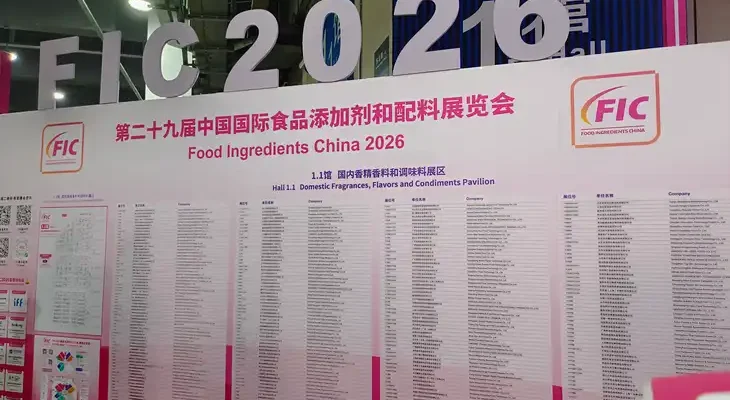
Sinofi Ingredients participated in the 30th Food Ingredients China (FIC) 2026, held from 17 to 19 March 2026 at the National Exhibition and Convention Center (NECC) in Shanghai. Co-organized by the China Food Additives and Ingredients Association, FIC remains the largest and most authoritative trade platform for food additives and ingredients in Asia, building on the previous edition’s record of more than 1,600 exhibitors and over 140,000 trade visitors. Across three days of exhibitions, technical seminars, and B2B meetings, our team engaged with current customers, prospective partners, and end-users across the food and beverage manufacturing sector. This report summarizes the key observations from FIC 2026, organized by major ingredient category, and outlines the implications for our product strategy, R&D direction, and commercial planning.
Table of Contents
Developments in Sweetener Industry
The sweetener segment was again one of the most active categories at FIC 2026, reflecting the sustained sugar-reduction agenda across beverages, dairy, baked goods, and confectionery. Sucralose, acesulfame-K, and aspartame retained substantial booth presence, but the strongest commercial momentum was visible around natural and next-generation sweeteners. Steviol glycosides, particularly Reb M and Reb D produced via enzymatic conversion or precision fermentation, were promoted heavily for their cleaner sweetness profile and improved cost positioning. Allulose attracted significant interest as a bulk sweetener with sugar-like functionality, supported by recent regulatory progress in several Asian markets. Monk fruit extract, thaumatin, and brazzein occupied a smaller but visible specialty niche. Sugar alcohols, especially erythritol and xylitol, continued to feature in formulations targeting diabetic-friendly and oral-care positioning. Buyer conversations at our booth confirmed that taste masking, mouthfeel restoration, and label simplicity have become decisive purchasing criteria, often outweighing pure sweetness intensity or cost-per-unit comparisons.
Developments in Antioxidant Industry
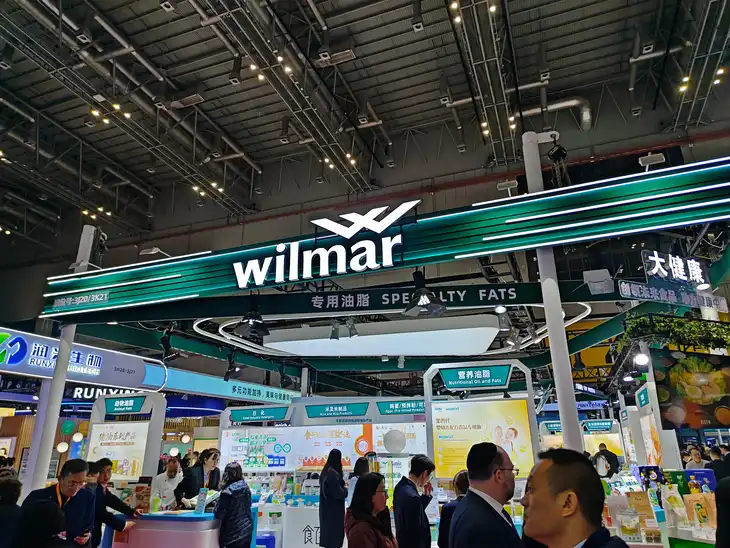
Antioxidant suppliers showcased a clear pivot toward natural and clean-label solutions. Synthetic antioxidants such as BHA, BHT, and TBHQ remained available for industrial applications, but visitor interest concentrated on rosemary extract, mixed tocopherols, ascorbic acid and its esters, green tea polyphenols, and acerola extract. Several exhibitors highlighted application-specific blends optimized for edible oils, meat products, and high-fat snacks, where oxidative stability directly affects shelf life. Encapsulation technologies, including spray-dried and emulsified formats, were positioned as a means of improving solubility, dispersion, and heat stability without compromising sensory attributes. Functional positioning was also evident, with astaxanthin, lycopene, and resveratrol bridging the boundary between food antioxidants and nutraceutical ingredients. Discussions with formulators indicated that demand is increasingly driven not only by shelf-life extension, but also by the marketing value of “no artificial preservatives” claims, particularly in the beverage, dairy, and pet-food categories.
Developments in Gums and Hydrocolloids Industry
Gums and hydrocolloids occupied substantial floor space, reflecting their critical role in texture engineering, fat reduction, and plant-based product development. Xanthan gum, guar gum, locust bean gum, and carrageenan continued to dominate volume applications, while gellan gum, tara gum, and konjac glucomannan were emphasized for premium and specialty positioning. Pectin suppliers highlighted low-methoxyl and amidated grades suitable for reduced-sugar jams and fruit preparations, aligning with the sweetener trends noted above. A particularly visible theme was the use of hydrocolloid blends for plant-based dairy and meat analogs, where the combination of methylcellulose, native starches, and konjac is being refined to deliver better cooking performance, juiciness, and bite. Several exhibitors also profiled newer fibers such as resistant dextrin, soluble corn fiber, and citrus fiber, which combine textural functionality with nutritional claims. Buyers expressed strong interest in cost optimization through synergistic blends, particularly in light of fluctuating raw-material prices for seed-based and seaweed-derived gums.
Developments in Flavor and Fragrance Ingredients
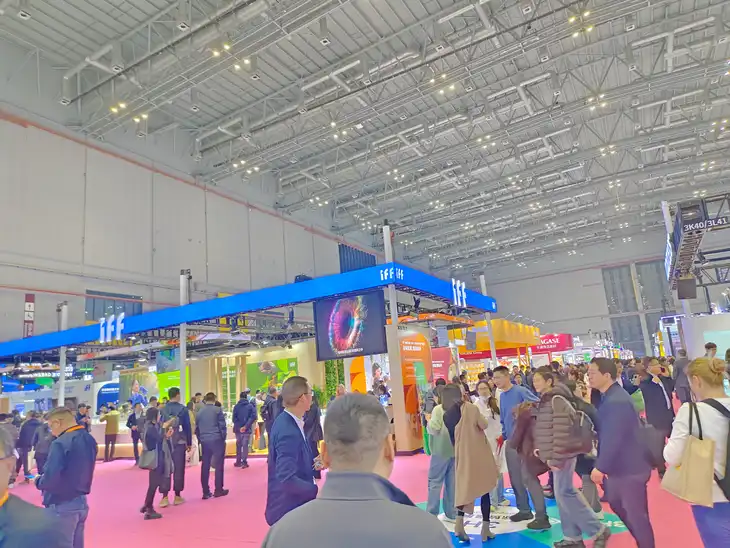
Flavor and fragrance suppliers used FIC 2026 to reinforce a shift toward natural, traceable, and application-specific solutions. Core categories such as vanilla, citrus oils, dairy flavors, and savory reaction flavors were well represented, alongside botanical extracts, fermented flavor bases, and yeast-derived umami enhancers. A notable theme was the integration of flavor-modulation technology — including bitter blockers, sweetness enhancers, and saltiness boosters — to support reduced-sugar and reduced-sodium formulations without compromising consumer acceptance. Several exhibitors also highlighted encapsulated and heat-stable flavor systems for bakery, instant noodles, and ready meals, while spray-dried and emulsified formats addressed beverage and dairy applications. Beyond food, fragrance houses presented ingredient solutions for personal care, household, and home-fragrance segments, reflecting the broadening scope of the show. Customer feedback confirmed that flavor differentiation, supported by clear documentation on origin and processing, is becoming a primary route to product premiumization in both domestic Chinese and export-oriented Asian markets.
Developments in Cooling Agents
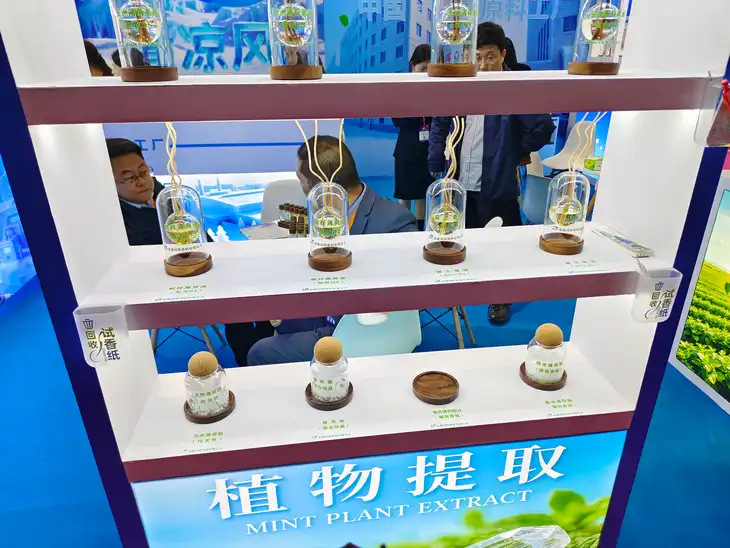
The cooling agents category, while smaller in scale than sweeteners or hydrocolloids, demonstrated notable innovation. Beyond traditional menthol and menthol crystals, suppliers presented an expanded portfolio of WS-series cooling compounds — including WS-23, WS-3, and WS-12 — designed to deliver targeted cooling intensity, longer duration, and reduced minty taste. Such ingredients are increasingly relevant for confectionery, chewing gum, oral care, sports beverages, and functional drinks where a clean cooling effect is desired without strong flavor interference. Several exhibitors also showcased natural cooling alternatives derived from mint species and plant essential oils, positioned for clean-label formulations. Discussions at our booth indicated growing demand from beverage and personal-care customers for tailored cooling profiles, with emphasis on the timing of onset, peak intensity, and lingering sensation, suggesting clear opportunities for customized blends.
Across these categories, FIC 2026 confirmed several converging industry trends: a sustained shift toward natural, clean-label, and traceable ingredients; the rapid maturation of fermentation- and enzyme-based production technologies; and the growing importance of multifunctional solutions that combine sensory performance with nutritional or marketing benefits. Sugar reduction, plant-based product development, and shelf-life optimization continue to act as the principal drivers of new ingredient demand. For our company, the exhibition reinforced the strategic value of expanding our natural sweetener and clean-label antioxidant portfolio, deepening our hydrocolloid blending capability, and developing differentiated cooling and flavor systems aligned with reduced-sugar and reduced-sodium formulations. We will follow up promptly with priority leads identified during the show, advance technical sampling commitments, and integrate these insights into our 2026–2027 product roadmap and key-account planning. FIC 2026 again proved to be an indispensable platform for market intelligence, customer engagement, and strategic positioning in the Asian food ingredients industry.