





This section provides an overview of gamma-nonalactone (γ-nonalactone or aldehyde C-18), covering its manufacturing processes and regulatory status, applications in food, beverage, personal care, household products, flavour, and fragrance industries. Also, please check out the introduction to gamma-nonalactone manufacturers, supply chain issues, gamma-nonalactone suppliers, and gamma-nonalactone prices. Sinofi can help you buy gamma-nonalactone at bulk wholesale prices based on FEMA 2781 and CAS 104-61-0.
Table of Contents
What is Gamma-Nonalactone (Aldehyde C-18)?
Gamma-nonalactone, also known as γ-nonalactone or aldehyde C-18, represents one of the most valuable lactone compounds in the flavour industry. This cyclic ester has established itself as an indispensable ingredient in both natural and artificial flavour systems, particularly for applications requiring coconut, peach, and tropical fruit characteristics. Gamma-nonalactone is a five-membered lactone ring with a pentyl side chain. Its structure contributes to both its volatility profile and its ability to interact with food matrices, making it particularly effective in oil-based and aqueous flavour systems alike. In e-liquid formulations, gamma-nonalactone pairs well with WS-23, eucalyptol, and neotame, producing a coconut note with a mild, sweet character. It exhibits good solubility in alcohol and oils while showing limited water solubility, which influences its behavior in various applications. According to the U.S. Food and Drug Administration (FDA), gamma-nonalactone is approved to be used in the flavour, fragrance, and food industries.
Regulatory Status and Safety Considerations
Gamma-nonalactone has been evaluated by relevant regulatory authorities like JECFA, EFSA, RIFM, ECHACHEM, NIST, and WHO. It holds Generally Recognized as Safe (GRAS) status in the United States and is approved for use in food and beverages in most major markets worldwide. It appears on the Flavor and Extract Manufacturers Association (FEMA) GRAS list, which facilitates its use in flavour formulations intended for global distribution. The fragrance standard of gamma-nonalactone has been set by organizations such as IFRA.
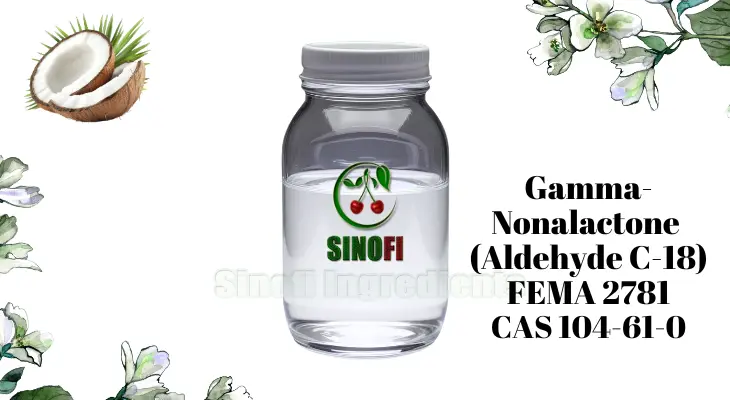
Natural Occurrence
Gamma-nonalactone occurs naturally in various fruits, including peaches, apricots, strawberries, and coconuts, which supports its use in natural flavour systems when derived from appropriate natural sources. Both synthetic and natural gamma-nonalactone are commercially available, allowing formulators to select materials appropriate for their specific labeling requirements and cost constraints.
Sensory Profile and Organoleptic Characteristics
The sensory profile of gamma-nonalactone is characterized primarily by its intense coconut aroma, often described as sweet, creamy, and slightly fruity. At lower concentrations, the compound exhibits pronounced peach and apricot notes, while at higher levels, the coconut character becomes dominant. This concentration-dependent behavior makes it a versatile tool in flavour formulation, as the formulator can adjust usage levels to emphasize either the stone fruit or tropical aspects.
CAS No.: 104-50-7
According to the American Chemical Society, the CAS number of gamma-nonalactone is 104-50-7.
CAS Name: γ-Nonalactone
Molecular Formula: C9H16O2
Molecular Mass: 156.22
Appearance: Colorless to light yellow, clear liquid.
JECFA Number: 229
Food Chemicals Codex Listed: Yes
Boiling Point: 243.00 °C. @ 760.00 mm Hg
Solubility: Soluble in alcohol, most fixed oils, and propylene glycol; insoluble in water.
Other Names:
♦γ-Amyl-γ-butyrolactone
♦γ-Nonalactone
♦ Prunolide
♦γ-Nonanolide
♦γ-Amylbutyrolactone
♦ 4-Nonanolide
♦γ-Nonanolactone
♦ 4-Pentyl-butanolide
♦ Nonan-1,4-olide
♦γ-Pentyl-γ-butyrolactone
♦ Cocos aldehyde
♦ Coconut Aldehyde
♦ Aldehyde C18
Gamma-Nonalactone Odor
Odor Strength: Medium
Substantivity: 309 hours at 100.00 %
Odor Description: At 100.00 %, coconut-like, sweet, fatty, fruity.
FEMA Number 2781
According to the Flavor and Extract Manufacturers Association (FEMA), the FEMA number of gamma-nonalactone is 2781.
Bulk Gamma-Nonalactone Manufacturers
The bulk gamma-nonalactone manufacturing sector is characterized by a concentration of production facilities in specific geographic regions, with China, Europe, and North America serving as primary manufacturing hubs. Top gamma-nonalactone manufacturers like Kao Corporation and Givaudan maintain a strong presence in the market, particularly in supplying high-purity grades required for pharmaceutical and premium fragrance applications. They often emphasize quality certifications, regulatory compliance, and sustainable production practices as key differentiators. Chinese gamma-nonalactone manufacturers have emerged as dominant players in recent years, leveraging cost advantages and scaled production capabilities to capture substantial market share. These facilities typically produce gamma-nonalactone through chemical synthesis routes, though some manufacturers have developed biotechnological processes to meet growing demand for natural and nature-identical compounds.
Sinofi is a bulk gamma-nonalactone manufacturer in China, and we have a manufacturing facility with 2,500 square meters for the production of gamma-nonalactone. We supply high-quality gamma-nonalactone at bulk prices and serve food, beverage, personal care, household products, flavour, and fragrance industries worldwide.
Manufacturing Process of Gamma-Nonalactone (Aldehyde C-18)
The manufacture of gamma-nonalactone through established synthetic routes demonstrates the successful application of fundamental organic chemistry principles to industrial-scale production. Continued refinement of process conditions, analytical methods, and quality control procedures ensures that manufacturers can reliably supply this important compound to meet the evolving needs of the flavour and fragrance industries.
Primary Synthetic Routes
Industrial production of aldehyde C-18 predominantly employs synthetic methodologies rather than extraction from natural sources, given the economic advantages and supply reliability of chemical synthesis. The most widely implemented commercial route involves the Baeyer-Villiger oxidation of 2-pentylcyclopentanone, which provides direct access to the lactone structure through insertion of an oxygen atom into the carbonyl-adjacent carbon-carbon bond.
The Baeyer-Villiger oxidation proceeds through the formation of an intermediate following nucleophilic attack of the peracid oxidant on the ketone carbonyl. Subsequent rearrangement with simultaneous migration of the more substituted carbon and departure of the carboxylate leaving group yields the desired lactone product. Common peracid reagents employed in industrial processes include peracetic acid and meta-chloroperoxybenzoic acid, with the choice depending on cost considerations, handling requirements, and process compatibility.
An alternative synthetic approach utilizes the cyclization of 5-hydroxynonanoic acid or its derivatives under acidic conditions to form the lactone ring. This method requires prior synthesis or acquisition of the hydroxy acid starting material, which can be prepared through various routes, including aldol condensation reactions followed by appropriate functional group transformations. While this approach offers certain advantages in terms of selectivity and process control, the additional synthetic steps generally render it less economically attractive for large-scale production compared to the Baeyer-Villiger route.
Bulk Gamma-Nonalactone Suppliers
The bulk gamma-nonalactone supply operates through a multi-tiered structure encompassing direct manufacturers, specialized chemical distributors, and fragrance and flavour ingredient trading houses. Top gamma-nonalactone manufacturers like Kao Corporation and Givaudan represent the primary source for large-volume purchasers requiring consistent supply at competitive pricing. These suppliers maintain production facilities and offer the advantage of direct control over manufacturing processes, quality systems, and inventory management. Major manufacturing suppliers are concentrated in China and select European countries, with each region offering different combinations of pricing, quality standards, and regulatory compliance capabilities. Chinese gamma-nonalactone suppliers have captured significant market share through aggressive pricing strategies and substantial production capacity, though quality consistency can vary considerably among different suppliers.
Sinofi is a bulk gamma-nonalactone supplier in China, and we have a warehouse with 1,200 square meters for high-quality gamma-nonalactone. We sell different grades of gamma-nonalactone at wholesale prices, serving end-users in food, beverage, personal care, household products, flavour, and fragrance industries.
Supply Chain of Gamma-Nonalactone (Aldehyde C-18)
The gamma-nonalactone supply chain represents a complex network of chemical manufacturers, distributors, logistics providers, and end users spanning multiple continents and industry sectors.
Supply Chain Architecture and Tier Structure
The gamma-nonalactone supply chain operates through a hierarchical structure comprising distinct tiers, each performing specialized functions that collectively enable the flow of material from raw chemical feedstocks to finished consumer products. This architecture has evolved to balance efficiency, specialization, and risk distribution across multiple participants, creating a resilient yet complex network that requires careful management and coordination.
At the foundation of the supply chain lie the raw material suppliers who provide the petrochemical-derived precursors required for aldehyde C-18 synthesis. The second tier encompasses aldehyde C-18 manufacturers who transform raw materials into the finished chemical product through various synthetic pathways. Chinese manufacturers dominate production volumes, leveraging low-cost labor, favorable energy pricing, and substantial capital investment in chemical infrastructure. The third tier consists of distributors, trading houses, and specialized ingredient suppliers who purchase bulk quantities from manufacturers and perform value-added activities. These intermediaries serve critical functions in the supply chain by aggregating demand from numerous smaller customers who lack the volume requirements or organizational capabilities to establish direct manufacturing relationships. Major chemical distributors maintain warehouse networks across multiple regions, enabling faster delivery times and reduced minimum order quantities compared to direct manufacturing sources. Specialized flavour and fragrance ingredient suppliers focus exclusively on serving the needs of fragrance houses, flavour companies, and food manufacturers, combining technical application knowledge with sourcing expertise to provide comprehensive ingredient solutions rather than simply commodity chemical supply. The end user tier comprises flavour and fragrance companies, food and beverage manufacturers, personal care product makers, and pharmaceutical firms that incorporate aldehyde C-18 into finished formulations destined for consumer or industrial markets.
Wholesale and Buy Gamma-Nonalactone in Bulk
The procurement of gamma-nonalactone in wholesale and bulk quantities requires careful planning, thorough supplier evaluation, and strategic negotiation to achieve optimal value while ensuring material quality and supply continuity. Gamma-nonalactone buyers should establish appropriate procurement processes and develop effective supplier relationships.
Understanding Bulk Purchase Requirements and Economics
Wholesale and bulk purchasing of gamma-nonalactone begins with accurately defining volume requirements and consumption patterns. The threshold for qualifying as a bulk purchaser varies among suppliers, though most manufacturers consider orders of five hundred kilograms or greater as entering bulk territory. Reaching these volume levels unlocks meaningful price advantages compared to smaller quantity purchases through distributors, with savings typically ranging from fifteen to thirty percent depending on specific supplier dynamics and market conditions.
Identifying and Qualifying Wholesale Suppliers
The supplier identification process should cast a wide net initially, considering manufacturers across different geographic regions as well as established chemical distributors offering bulk quantities. Chinese manufacturers dominate global production and typically offer the most aggressive pricing, though quality consistency and communication effectiveness vary substantially among different suppliers. European manufacturers command premium pricing justified by superior technical support and regulatory compliance capabilities for demanding applications.
Establishing Quality Verification Protocols
Implementing robust incoming inspection procedures protects your organization from quality issues that could disrupt production or compromise finished product quality. Every bulk shipment should undergo verification testing before acceptance and transfer into production inventory. At minimum, this testing should include gas chromatographic analysis confirming purity meets specifications, organoleptic evaluation by qualified personnel assessing odor character and intensity, verification of physical properties such as density and refractive index, and review of the certificate of analysis for completeness and consistency with specifications.
As a bulk gamma-nonalactone manufacturer and supplier in China, we wholesale this ingredient to end users in the food, beverage, personal care, household products, flavour, and fragrance industries. We also supply it to small customers. Normally, they want to buy gamma-nonalactone in small quantities. To serve them, we can sell gamma-nonalactone at bulk prices and provide a one-stop purchasing service.
Gamma-Nonalactone Prices (USD/Kg)
Food Grade Gamma-Nonalactone Prices (FCC, GC Content >=98.0%)
| Volume | Unit Price | Shipment |
| 50g | 9 USD | Express |
| 500g | 44 USD | Express |
| 1Kg | 62 USD/Kg | Express |
| 20Kg | 25% cheaper | Express |
| 100Kg-Above | negotiable | Express / Sea |
Gamma-nonalactone pricing exhibits substantial variation based on quality grade, supplier origin, order volume, and target application requirements. The global market operates across multiple price tiers that reflect different value propositions and service levels offered by suppliers in various categories.
Current Price Ranges and Market Segments
Standard food-grade gamma-nonalactone from Chinese manufacturers is typically priced in the range of 20 to 60 USD/Kg. This price band represents the most competitive segment of the market, serving cost-sensitive applications in industrial fragrances, household products, and mass-market personal care items where price considerations often outweigh quality premiums. The lower end of this range applies to very large volume commitments with established suppliers, while smaller orders or spot purchases trend toward the higher end. European manufacturers command significant premiums, with prices typically ranging from forty-five to sixty-five dollars per kilogram for food-grade and premium fragrance-grade material. This pricing tier reflects higher manufacturing costs in Western Europe, including labor expenses, energy costs, and regulatory compliance burdens that exceed those in Asian production locations. North American suppliers, though fewer in number, typically price in the range of fifty to seventy dollars per kilogram, reflecting domestic cost structures similar to European operations plus the convenience premium for customers seeking to source locally and simplify supply chain management. Premium grades offering purity levels exceeding ninety-eight percent and natural and nature-identical certifications record 300-400 USD per Kg. These specialty products serve high-end perfumery, premium flavour applications, and specialized technical uses where the enhanced purity or specific sourcing characteristics justify incremental costs. The market for premium grades remains relatively small but exhibits less price sensitivity due to the critical nature of quality attributes in target applications.
Furthermore, the above gamma-nonalactone price quotations do not include the express shipping fee. The reason is that the shipment cost may exceed the value of the gamma-nonalactone sample. However, the bulk wholesale prices of aldehyde C-18 will be much lower than those of small orders. Please contact us for more details.
Gamma-Nonalactone (Aldehyde C-18) Specification
| Appearance: | Colorless to light yellow, clear liquid. |
| Odor: | Sweet, coconut, fruity odour. |
| Purity (GC) | >=98% |
| Refractive Index (20°C) | 1.446-1.450 |
| Specific Gravity (25°C) | 0.958-0.966 |
| Acid Value (mgKOH/g) | <=5.0 |
| Heavy Metal (as Pb, mg/Kg) | <=10 |
| As (mg/Kg) | <=3 |
Gamma-Nonalactone Uses
Gamma-nonalactone serves as a versatile ingredient across multiple industries, valued primarily for its distinctive sensory characteristics that deliver rich coconut and peach notes to finished products.
Flavour Applications in Food and Beverage Products
The food and beverage industry represents the largest application sector for gamma-nonalactone, where the compound serves as a key ingredient in creating coconut, tropical fruit, and creamy flavour profiles across numerous product categories. Bakery and confectionery applications constitute particularly significant usage areas, with aldehyde C-18 enhancing cookies, cakes, pastries, candies, and chocolate products intended to deliver coconut or tropical fruit experiences. The compound pairs exceptionally well with vanilla, providing depth and complexity to basic vanilla flavours while creating the characteristic taste profile consumers associate with coconut macaroons, German chocolate cake, and similar traditional preparations. Confectioners employ aldehyde C-18 in coconut-flavoured candies, cream centers, and chocolate coatings, where its creamy character reinforces sweetness and provides distinctive tropical notes that differentiate products in competitive markets.
Dairy applications leverage aldehyde C-18 to create exotic flavour variants in yogurt, ice cream, flavoured milk, and dairy desserts. Ice cream manufacturers particularly value the compound for coconut, piña colada, and tropical fruit varieties where its rich, creamy character complements dairy fat and enhances perceived indulgence. The stability of aldehyde C-18 through freezing and temperature fluctuations ensures consistent flavour delivery throughout product shelf life, maintaining quality from manufacturing through consumer consumption. Yogurt producers incorporate the ingredient in coconut and tropical fruit flavours, targeting consumers seeking alternatives to traditional berry and vanilla options, with the creamy lactonic notes of aldehyde C-18 proving particularly complementary to cultured dairy products.
Beverage applications span both alcoholic and non-alcoholic categories, with aldehyde C-18 contributing to tropical cocktail flavours, flavoured spirits, ready-to-drink beverages, and functional drinks emphasizing exotic taste experiences. The compound proves essential in piña colada and coconut rum flavours, where authentic tropical character distinguishes premium products from those relying on more simplistic or artificial-tasting flavour systems. Non-alcoholic beverage manufacturers employ aldehyde C-18 in coconut water products, tropical juice blends, and specialty coffee drinks, where coconut notes add complexity and appeal to health-conscious consumers seeking natural and tropical flavour profiles.
Fragrance Applications in Personal Care and Cosmetics
The fragrance industry employs gamma-nonalactone extensively in creating tropical, gourmand, and creamy scent compositions for personal care products, fine fragrances, and cosmetics. The compound’s rich coconut character makes it indispensable for recreating tropical beach and vacation themes that prove perennially popular in consumer fragrances. Perfumers incorporate aldehyde C-18 as a heart or base note component in compositions featuring tropical florals, sun care themes, or exotic fruit accords, where its creamy sweetness provides substantive body and longevity to fragrance constructions. The lactonic character contributes perceived richness and depth that enhances overall fragrance quality, while the peachy facets add complexity, preventing the scent from reading as one-dimensional coconut.
Hair care products represent a major application area where aldehyde C-18 delivers tropical and exotic scent experiences highly valued by consumers. Shampoos, conditioners, hair masks, and styling products frequently feature coconut fragrances that consumers associate with nourishment, moisture, and tropical luxury. The compound’s compatibility with surfactant systems and stability through typical hair care formulation processes, including elevated pH environments and the presence of conditioning agents, ensures fragrance performance survives manufacturing and delivers expected scent experiences during consumer use. Many premium hair care brands built their identities around signature coconut fragrances formulated with aldehyde C-18 as a key component, demonstrating the ingredient’s ability to create memorable and distinctive brand experiences.
Fine fragrance applications showcase aldehyde C-18 in both mass market and prestige perfumes, where its versatility enables diverse creative expressions. Gourmand fragrances, which recreate edible scents like vanilla, caramel, and coconut, rely heavily on lactones, including aldehyde C-18 to achieve their characteristic sweet, creamy profiles. These fragrances have achieved substantial commercial success, particularly in women’s fragrance categories, demonstrating strong consumer appeal for scents reminiscent of desserts and confections. Tropical and exotic fragrances targeting vacation and summer themes incorporate the compound to evoke beaches, palm trees, and tropical destinations, creating olfactory experiences that transport consumers through scent. The ingredient also appears in modern masculine fragrances, where coconut provides unexpected sweetness and modernity to compositions traditionally dominated by woody and aromatic notes.
Household and Home Care Applications
Household products increasingly incorporate aldehyde C-18 as manufacturers recognize that pleasant fragrances significantly influence consumer product selection and repurchase behavior. Laundry care products, including detergents, fabric softeners, and scent boosters, frequently feature tropical and fresh fragrances where coconut notes provide sweetness and perceived cleanliness. The compound’s stability through alkaline wash conditions and its ability to substantiate on fabrics ensure fragrance performance survives laundering and delivers scent throughout fabric wear. Consumers associate coconut fragrances with freshness and cleanliness, making aldehyde C-18 particularly appropriate for products promising superior cleaning performance and long-lasting fragrance benefits.
Technical Considerations in Application Development
Successful application of gamma-nonalactone requires understanding optimal use levels, synergistic combinations with complementary ingredients, and stability considerations specific to different product formats. Use level optimization balances desired sensory intensity against cost efficiency and potential off-notes that may emerge at excessive concentrations. Most applications employ aldehyde C-18 at concentrations between 5 and 30 ppm in finished products, though specific optimal levels vary based on product type, flavour intensity preferences, and the presence of competing flavours or fragrances. Over-application can produce a cloying or artificial character that detracts from product quality, making careful dosing and iterative testing essential during formulation development.
Synergistic flavour and fragrance combinations enhance aldehyde C-18 performance by creating more complex and authentic sensory profiles than the compound delivers independently. Pairing aldehyde C-18 with vanillin creates classic coconut profiles suitable for bakery and confectionery applications, with the vanilla component providing sweetness and depth that complements the creamy lactonic character. Tropical fruit flavours benefit from combinations with pineapple, mango, and banana notes that broaden the sensory experience beyond simple coconut, creating vacation-themed flavour complexes popular in beverages and frozen desserts. Floral components, including jasmine, ylang-ylang, and gardenia, work synergistically with aldehyde C-18 in fragrance compositions, adding sophistication and complexity to tropical scent themes.
Stability considerations influence application choices and formulation strategies, as aldehyde C-18 exhibits varying stability profiles across different product environments. Acidic systems such as fruit beverages and certain dairy products generally provide good stability, preserving sensory characteristics throughout typical shelf life periods. Alkaline conditions, including some cleaning products and certain baked goods, may accelerate lactone hydrolysis, potentially requiring use level adjustments or stabilization strategies to maintain flavour performance. Oxidative stability proves generally satisfactory, though products with long shelf lives or exposure to elevated temperatures benefit from antioxidant systems that protect aldehyde C-18 and other sensitive flavour components from degradation.
Gamma-Nonalactone Benefits
Gamma-nonalactone delivers substantial benefits to manufacturers, formulators, and end users across the flavour and fragrance industries, creating value through its distinctive sensory characteristics, favorable technical properties, and strong commercial performance.
Superior Sensory Performance and Consumer Appeal
The primary benefit of gamma-nonalactone lies in its exceptional ability to deliver authentic, appealing coconut and tropical fruit sensory experiences that resonate strongly with consumers across diverse demographic segments and geographic markets. The compound provides a rich, creamy coconut character that closely approximates the sensory profile of natural coconut products, enabling formulators to create convincing tropical flavour and fragrance experiences without the practical challenges and cost variability associated with natural coconut-derived ingredients. This authenticity proves particularly valuable in premium product applications where consumers possess sophisticated sensory expectations and readily detect artificial or inferior flavour and fragrance systems.
Technical Advantages in Formulation and Processing
Aldehyde C-18 offers significant technical benefits that simplify formulation development and enhance manufacturing efficiency compared to alternative coconut flavour and fragrance sources. The compound exhibits excellent stability under typical food and cosmetic processing conditions, maintaining sensory integrity through heating, mixing, emulsification, and other standard manufacturing operations that might degrade more sensitive natural extracts or less stable synthetic alternatives. This processing stability reduces the need for protective formulation strategies or specialized handling procedures, streamlining production processes and minimizing the risk of batch failures due to flavour or fragrance degradation during manufacturing.
Gamma-Nonalactone in E-Liquid and Vaping Products
The use of gamma-nonalactone in electronic cigarette liquids and vaping products represents a specialized application segment that has emerged alongside the rapid growth of the vaping industry over the past decade. This compound’s presence in e-liquid formulations reflects broader patterns in flavour ingredient adoption across vaping products.
Application Context in E-Liquid Formulations
Gamma-nonalactone entered e-liquid formulations as manufacturers sought to create diverse flavour profiles that would appeal to adult consumers and differentiate products in increasingly competitive markets. The compound’s characteristic coconut and creamy notes proved attractive for tropical and dessert-flavoured e-liquids, categories that achieved substantial commercial success during the vaping industry’s expansion phase. E-liquid formulators employed aldehyde C-18 alongside numerous other flavouring compounds originally developed for food and beverage applications, adapting these ingredients to the unique requirements of vaporization and inhalation delivery rather than oral consumption. The concentration levels of aldehyde C-18 in e-liquid formulations vary considerably based on desired flavour intensity and the presence of other flavouring components, though typical use levels range from 0.1 to 1 percent of total e-liquid volume.
Regulatory Landscape and Policy Developments
The regulatory framework governing flavouring ingredients in e-liquids remains in flux across different jurisdictions, reflecting ongoing policy debates about appropriate oversight approaches for vaping products generally and flavoured variants specifically. In the United States, the Food and Drug Administration asserted regulatory authority over e-cigarettes and their components through the Family Smoking Prevention and Tobacco Control Act, establishing that these products require premarket authorization demonstrating that their marketing would be appropriate for the protection of public health. The premarket tobacco product application pathway requires manufacturers to provide comprehensive information about product formulations, including all ingredients and their quantities, manufacturing processes, and available toxicological data supporting safety claims. For products containing gamma-nonalactone and other flavouring compounds, this process necessitates compilation of available safety data and potentially the generation of new studies characterizing inhalation toxicity and thermal stability. European Union regulations governing e-cigarettes under the Tobacco Products Directive establish notification requirements for e-liquid ingredients, including flavouring substances, though the framework does not specifically prohibit particular flavours or flavouring compounds.
Gamma-Nonalactone in Flavour and Fragrance Formulation
Gamma-nonalactone stands as one of the most versatile and essential ingredients in the flavour and fragrance formulator’s palette, offering distinctive sensory characteristics that prove indispensable across numerous application categories.
Synergistic Formulation Strategies in Flavour Systems
The creation of authentic and compelling tropical flavour profiles requires understanding the synergistic relationships between aldehyde C-18 and complementary flavour components. Vanilla compounds, including vanillin and ethyl vanillin, form perhaps the most fundamental synergy with gamma-nonalactone, with this combination constituting the backbone of countless coconut flavour formulations across food and beverage applications. The ratio between gamma-nonalactone and vanilla components significantly influences the overall character, with higher vanilla content shifting perception toward classic coconut candy profiles while gamma-nonalactone dominance creates fresher, more fruit-forward impressions. Typical working ratios range from two-to-one up to five-to-one gamma-nonalactone to vanillin, though optimal proportions depend on specific application requirements and desired sensory positioning.
Fruity esters complement gamma-nonalactone exceptionally well in creating complex tropical fruit flavours that transcend simple coconut identification. Isoamyl acetate contributes banana notes that pair naturally with coconut character in piña colada and tropical smoothie applications, while ethyl butyrate and methyl butyrate add pineapple nuances that enhance tropical authenticity. The peach and apricot undertones inherent in aldehyde C-18 harmonize beautifully with true peach lactones, including gamma-decalactone and delta-decalactone, enabling the creation of peach-coconut cream flavours popular in yogurt, ice cream, and bakery fillings. Strategic layering of multiple lactones at varying concentrations creates depth and complexity that single-component approaches cannot achieve, though formulators must carefully balance these potent materials to prevent muddy or confused sensory profiles.
Dairy flavour modifiers, including diacetyl, acetoin, and various butter flavours, work synergistically with aldehyde C-18 to enhance perceived creaminess and richness in applications ranging from coconut cream pie flavours to tropical milkshake profiles. The natural association between coconut and cream in traditional culinary preparations means that consumers readily accept and appreciate these combinations, which deliver indulgent sensory experiences particularly valued in premium dessert and beverage applications. The lactonic character of gamma-nonalactone reinforces dairy creaminess perceptions even in plant-based formulations lacking actual dairy components, making it valuable in developing vegan and lactose-free products that must deliver creamy sensory satisfaction without animal-derived ingredients.
Citrus notes provide contrast and brightness that prevent coconut formulations from becoming excessively sweet or monotonous, with lime oils and lime terpenes proving particularly effective in creating refreshing tropical profiles reminiscent of coconut water and beach beverages. The addition of small quantities of aldehydes, including decanal and octanal, at sub-threshold levels enhances perceived freshness and natural quality.
Fragrance Formulation Techniques and Compositional Strategies
Fine fragrance applications employ gamma-nonalactone across multiple olfactory families, including oriental, gourmand, tropical floral, and modern masculine compositions, where its versatility enables diverse creative expressions. In oriental fragrances, the compound contributes to the characteristic warmth and sweetness that defines the family, working synergistically with vanilla, amber notes, and various resinous materials to create enveloping, sensual bases. Typical usage levels in oriental bases range from one to five percent of the fragrance concentrate, providing substantive body without dominating the composition or shifting character excessively toward explicit coconut identification.
Gourmand fragrances representing edible scents derive substantial character from aldehyde C-18, which contributes essential creamy and dessert-like qualities that define this popular olfactory category. The compound pairs beautifully with other gourmand materials, including ethyl maltol, furaneol, vanillin, and various caramellic and pralinal notes to create compositions reminiscent of baked goods, confections, and creamy desserts. Usage levels in gourmand fragrances typically prove higher than oriental applications, often reaching five to ten percent of concentrate compositions where explicit coconut or tropical dessert impressions support creative intent. Perfumers must carefully balance these sweet materials against freshness modifiers and contrasting notes that prevent compositions from becoming excessively saccharine or one-dimensional.
Tropical floral fragrances utilize aldehyde C-18 as a bridge between floral heart notes and creamy base components, creating smooth transitions and enhancing overall composition coherence. The compound’s subtle peach facets complement white florals, including jasmine, gardenia, and frangipani, which often exhibit fruity undertones that harmonize naturally with lactonic character. Usage at one to three percent in tropical floral compositions provides sufficient impact to register as a distinct compositional element while allowing delicate floral notes to maintain prominence. The substantivity of aldehyde C-18 on skin ensures that tropical character persists into late drydown phases, creating signature effects that differentiate compositions and enhance memorability.
A Coconut Flavouring Using Gamma-Nonalactone
Include the following ingredients (by weight, unit Kg):
Caramelized Coconut Fermentation Extract: 10.0 Kg;
Gamma-nonalactone: 3.0 Kg;
Vanillin: 2.0 Kg;
Methyl cyclopentenolone: 0.3 Kg;
Ethyl Maltol: 0.5 Kg;
Propylene Glycol: 66.2 Kg
Purified Water: 18.0 Kg;
- In a mixing tank, first add 66.2 Kg of propylene glycol, then add 3.0 Kg gamma-nonalactone, 2.0 Kg vanillin, 0.3 Kg methyl cyclopentenolone, and 0.5 Kg ethyl maltol in sequence. Start stirring and continue stirring for 25 minutes until all solids are completely dissolved.
- Slowly add 10.0 Kg caramelized coconut fermentation extract while continuing to stir, and then continue stirring for 10 minutes.
- Finally, slowly add 18.0 Kg purified water and stir again for 18 minutes to ensure thorough mixing.
- Filter the resulting material through a filter cartridge with a pore size of 1 μm to obtain the coconut flavouring product with a caramel aroma.
In conclusion, gamma-nonalactone delivers comprehensive benefits spanning sensory performance, technical functionality, economic value, consumer appeal, regulatory acceptance, and sustainability considerations. As a bulk gamma-nonalactone manufacturer and supplier in China, we sell different grades of gamma-nonalactone at wholesale prices to clients around the world.