





This section focuses on an overview of vanillin acetate as well as its manufacturing processes and uses. Also, please check out the introduction to vanillin acetate manufacturers, supply chain issues, vanillin acetate suppliers, and vanillin acetate prices. Sinofi can help you buy high-quality vanillin acetate in bulk for your industry applications at wholesale prices based on FEMA 3108 and CAS 881-68-5.
Table of Contents
What is Vanillin Acetate?
Vanillin acetate, also known as acetovanillin or acetyl vanillin, is a fascinating compound that exists at the intersection of natural flavor chemistry and modern food science. It plays an important role in the food, flavor, and fragrance industries, yet remains relatively unknown to the general public. Vanillin acetate is created by acetylating vanillin, the primary component responsible for the characteristic flavor and aroma of vanilla. The resulting compound maintains many of vanillin’s desirable properties while offering enhanced stability and unique flavor characteristics. It provides a more complex vanilla profile compared to standard vanillin, having a creamier, more rounded character with subtle woody notes. Its lower volatility compared to vanillin means the scent lingers longer, making it ideal for products where extended fragrance release is desired. According to the U.S. Food and Drug Administration (FDA), vanillin acetate is approved to be used in food, flavour and fragrance, pharmaceutical, and cosmetic industries. It has also been evaluated by relevant regulatory authorities like JECFA, EUR-Lex, ECHACHEM, NIST, and WHO.
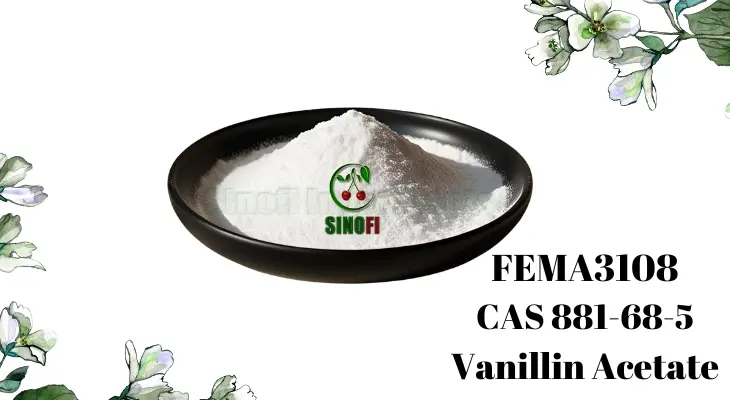
CAS No.: 881-68-5
According to the American Chemical Society, the CAS number of vanillin acetate is 881-68-5.
CAS Name: Acetovanillin
Molecular Formula: C10H10O4
Molecular Mass: 194.18
Appearance: White crystalline powder
Solubility: Soluble in alcohols and ethers, slightly soluble in water.
Other Names:
♦ Vanillin Acetate
♦ Acetylvanillin
♦ 4-(Acetyloxy)-3-Methoxybenzaldehyde
♦ Vanillin, Acetate
♦ 4-Formyl-2-Methoxyphenyl Acetate
♦ 4-O-Acetylvanillin
Vanillin Acetate Odor
Sweet, creamy, vanilla-like with a powdery heliotropine nuance.
FEMA Number 3108
According to the Flavor and Extract Manufacturers Association (FEMA), the number of vanillin acetate is FEMA 3108.
Bulk Vanillin Acetate Manufacturers
The global vanillin acetate production is dominated by several bulk manufacturers of vanillin derivatives. Top vanillin acetate manufacturers like Givaudan have advanced catalytic acetylation facilities, which enable them to produce pharmaceutical and food-grade vanillin acetate at an industrial scale. They are increasingly focusing on sustainability and have implemented energy efficiency programs, water recycling systems, and waste reduction initiatives at their vanillin acetate production facilities.
Sinofi is a bulk vanillin acetate manufacturer in China, and we have a manufacturing facility with 2,500 square meters for vanillin acetate production. We supply high-quality vanillin acetate at bulk prices and serve food, flavour and fragrance, pharmaceutical, and cosmetic manufacturers worldwide.
Manufacturing Process of Vanillin Acetate
Acetylation of Vanillin
The most common approach to vanillin acetate production involves direct acetylation of vanillin using acetic anhydride. This process typically occurs in three main steps:
- Reaction: Vanillin is mixed with acetic anhydride in the presence of a catalyst (commonly sodium acetate or pyridine).
- Heating: The mixture is heated to 70-90°C for several hours to facilitate the esterification reaction.
- Purification: The crude product undergoes separation, washing, and drying steps.
The key chemical reaction can be represented as:
Vanillin + Acetic anhydride → Vanillin acetate + Acetic acid
Vanillin acetate manufacturing continues to evolve, balancing traditional chemical methods with innovative green approaches. As consumer demand for vanilla flavors grows across multiple industries, optimizing production efficiency while addressing sustainability concerns remains a key focus for producers worldwide.
Bulk Vanillin Acetate Suppliers
The bulk vanillin acetate market is dominated by several key suppliers who have established robust manufacturing capabilities and distribution networks. Top vanillin acetate suppliers like Givaudan differentiate themselves through strict quality control and regulatory compliance. They command premium prices but offer exceptional purity and consistency. Chinese vanillin acetate suppliers offer competitive pricing due to lower manufacturing costs. They also provide high-quality vanillin acetate to international markets.
Sinofi is a bulk vanillin acetate supplier in China, and we have a warehouse with 1,200 square meters for high-quality vanillin acetate. We sell different grades of vanillin acetate at wholesale prices to food, flavour and fragrance, pharmaceutical, and cosmetic manufacturers.
Supply Chain of Vanillin Acetate
Vanillin acetate, a key aromatic compound used in flavoring and fragrance applications, traverses a complex global supply chain before reaching end consumers.
Raw Material Sourcing
The vanillin acetate supply chain begins with sourcing its precursor compounds: vanillin and acetic anhydride. Vanillin itself follows two major production pathways:
- Synthetic route: Predominantly derived from petrochemicals, specifically guaiacol and lignin. Major producers are located in China and Western Europe.
- Bio-based route: Extracted from natural vanilla beans or produced through bioconversion of ferulic acid. Madagascar, Indonesia, and Mexico are primary sources for natural vanilla, while specialized biotech facilities in Europe and North America handle bioconversion processes.
Acetic anhydride, the acetylation agent, is primarily manufactured by large chemical companies in the US, Germany, China, and Japan.
Primary Manufacturing
The manufacturing of vanillin acetate takes place in specialized chemical manufacturing facilities concentrated in China, Western Europe, United States. These facilities range from large integrated chemical companies to specialized flavor and fragrance manufacturers.
Distribution Network
The distribution network for vanillin acetate involves multiple channels:
- Direct supply: Large manufacturers supplying directly to major food, beverage, and consumer product companies.
- Distributors and traders: Specialized chemical distributors managing smaller volumes for medium-sized customers.
- E-commerce platforms: Emerging channel for smaller quantity purchases.
Key distribution hubs include Rotterdam, Singapore, Houston, and Shanghai, strategic ports facilitating global trade flows.
End-Use Industries
Vanillin acetate primarily serves:
- Food and beverage: Confectionery, baked goods, dairy products.
- Flavor and fragrance: Fine fragrances, body care products.
- Pharmaceuticals: Flavoring agent for medications.
- Cosmetic: Flavor enhancement.
This complex supply chain continues to adapt to changing market conditions, technological advances, and consumer preferences, ensuring this versatile aromatic compound remains available for its diverse applications across multiple industries.
Wholesale and Buy Vanillin Acetate in Bulk
Purchasing vanillin acetate in bulk offers significant advantages for businesses that regularly use this versatile ingredient. Vanillin acetate buyers should establish relationships with reliable wholesale suppliers and implement proper handling practices. They can optimize their supply chain while ensuring consistent product quality for their applications.
Advantages of Bulk Purchasing
Cost Efficiency
Purchasing vanillin acetate in wholesale quantities typically reduces the per-unit cost substantially. Bulk orders eliminate the premium associated with smaller packages and create economies of scale in shipping and handling.
Supply Security
Establishing relationships with wholesale suppliers ensures consistent access to high-quality vanillin acetate, protecting production schedules from potential supply disruptions.
Purchasing Considerations
Purity Requirements
Different applications require different purity grades of vanillin acetate. Food-grade products typically require higher purity and additional safety certifications compared to industrial applications.
Minimum Order Quantities
Wholesale suppliers often impose minimum order quantities (MOQs). While higher MOQs generally yield better pricing, they must be balanced against storage capabilities and shelf life.
As a bulk manufacturer and supplier of vanillin acetate in China, we supply high-quality acetylvanillin for food, flavour and fragrance, pharmaceutical and cosmetic industries. We also wholesale vanillin acetate to small customers. Normally, they want to buy vanillin acetate in small quantities. To serve them, we can wholesale vanillin acetate at bulk prices and provide a one-stop purchasing service.
Vanillin Acetate Prices (USD/Kg)
Food Grade Vanillin Acetate Prices (Purity: >=99%)
| Volume | Unit Price | Shipment |
| 50g | 34 USD | Express |
| 500g | 168 USD | Express |
| 1Kg | 240 USD/Kg | Express |
| 20Kg | 20% cheaper | Express |
| 100Kg-Above | negotiable | Express / Sea |
The global vanillin acetate prices have experienced significant fluctuations over the past year, with recent trends indicating an upward trajectory. Industry analysts report that vanillin acetate prices have increased by approximately 15-20% since early 2024. This surge can be attributed to several factors, including tariff wars, raw material shortages, transportation challenges, and production disruptions in key manufacturing regions. For companies heavily reliant on vanilla flavorings, the current price environment presents significant challenges that will require ongoing adaptation and strategic sourcing practices to maintain product quality while managing costs effectively.
Furthermore, the above price quotations of vanillin acetate, especially for small orders, do not include the express shipping fee. The reason is that the shipment cost of vanillin acetate may exceed the value of the sample. However, the bulk wholesale prices of vanillin acetate will be much lower than those of small orders. Please contact us for more details.
Vanillin Acetate Uses
Food Uses
Unlike pure vanillin, which can sometimes present an overly sweet or harsh profile, vanillin acetate offers a smoother, more complex vanilla character with subtle woody and creamy undertones. This makes it particularly valuable in:
- Premium chocolate formulations where a sophisticated vanilla note is desired.
- Baked goods where its heat stability prevents flavor degradation during processing.
- Dairy products, including premium ice creams and yogurts.
- Alcoholic beverages, particularly aged spirits like whiskey and rum.
- Tobacco flavouring: vanillin acetate enhances the sensory experience of tobacco products.
Food manufacturers appreciate vanillin acetate for its excellent stability in various pH environments and its resistance to oxidation, which extends product shelf life.
Flavor and Fragrance Uses
The most prominent use of vanillin acetate is in the flavor and fragrance industry. This modified form of vanillin offers distinct advantages over its parent compound, including enhanced stability and a more nuanced flavor profile.
• Fine fragrances, particularly in oriental and gourmand perfume families.
Pharmaceutical Uses
In pharmaceuticals, vanillin acetate serves multiple purposes:
- As a flavoring agent to mask bitter medicinal tastes in liquid formulations.
- As an excipient in certain tablet formulations.
- In aromatherapy products that claim to provide relaxation benefits.
- As a precursor in certain drug synthesis pathways.
Personal Care and Cosmetic Uses
The cosmetic industry leverages vanillin acetate’s pleasant aroma and chemical properties in:
- Skincare products: vanillin acetate contributes both fragrance and potential antioxidant benefits.
- Lip care products: vanillin acetate enhances user experience.
- Bath and body products: vanillin acetate is marketed for relaxation and comfort.
- Air fresheners and home fragrance products.
As consumer demand for natural ingredients grows, the industry has been exploring bio-based production methods for vanillin acetate. Recent advancements in biotechnology have led to more sustainable production pathways that reduce environmental impact compared to traditional petrochemical synthesis methods.
Vanillin Acetate Benefits
Enhanced Stability
One of the most significant benefits of vanillin acetate is its exceptional stability. Unlike natural vanilla extract or pure vanillin, vanillin acetate:
- Maintains its aromatic profile longer when exposed to heat.
- Resists oxidation during storage.
- Performs consistently in varying pH environments.
- Provides extended shelf life in finished products.
This stability makes it particularly valuable in baking applications, where high temperatures can degrade other vanilla flavoring agents.
Unique Sensory Profile
Vanillin acetate offers a distinctive organoleptic experience compared to traditional vanillin:
- Provides a smoother, less sharp vanilla note.
- Delivers a more rounded flavor profile with subtle woody undertones.
- Creates a longer-lasting sensory experience.
- Exhibits excellent blending properties with other flavours.
Food scientists particularly value its ability to enhance chocolate, caramel, and fruit flavors without overwhelming them.
Versatility in Applications
The modified structure of vanillin acetate expands its utility across numerous industries:
- Food production: Provides consistent flavor in baked goods, confectionery, and dairy products.
- Perfumery: Creates depth and longevity in fragrance compositions.
- Pharmaceuticals: Masks bitter tastes in medicines while maintaining effectiveness.
- Cosmetics: Offers pleasant, stable scent profiles in personal care products.
Economic Benefits
For manufacturers, vanillin acetate presents clear economic advantages:
- Lower usage rates are needed to achieve equivalent flavor impact.
- Reduced need for flavor refreshing during processing.
- More consistent batch-to-batch results.
- Less waste due to extended shelf life.
Environmental Considerations
Synthetic vanillin acetate production can help reduce pressure on traditional vanilla bean farming, which faces significant challenges:
- Vanilla orchids are resource-intensive to cultivate.
- Natural vanilla production is vulnerable to climate change.
- Growing demand for vanilla has led to environmental pressures in regions like Madagascar.
Vanillin Acetate Used in Food
A Kale Vegetable Beverage with Enzyme
It contains the following components (by weight): kale compound enzyme liquid, 60 parts; nutritional supplement composition, 19 parts; magnesium sulfate, 1.2 parts; calcium chloride, 1.3 parts; zinc sulfate, 0.9 parts; L-cysteine, 1.2 parts.
The raw materials for preparing the kale compound enzyme liquid include the following ingredients (by weight): kale, 29 parts; grapefruit, 18 parts; prune, 22 parts; spinach, 11 parts; rocket, 10 parts; Parmesan cheese, 13 parts; quinoa, 14 parts; mold agent, 1.7 parts; pullulan, 17 parts; polyglycerol ricinoleate, 21 parts; beta-ionone, 1.4 parts; vanillin acetate, 1.3 parts.
The raw materials for preparing the nutritional supplement composition include the following ingredients (by weight): chickpeas, 10 parts; pecan kernels, 15 parts; red snapper, 10 parts; propylene glycol alginate, 13 parts; sorbitan tristearate, 12 parts; sodium hydroxide, 1.1 parts.
In conclusion, vanillin acetate represents an important innovation in the world of flavoring and fragrance. Its enhanced stability, unique sensory profile, versatility, and economic benefits make it an invaluable tool for manufacturers seeking consistent, high-quality products. As a bulk manufacturer and supplier of vanillin acetate in China, we sell different grades of vanillin acetate at wholesale prices to large manufacturers and small customers worldwide.