




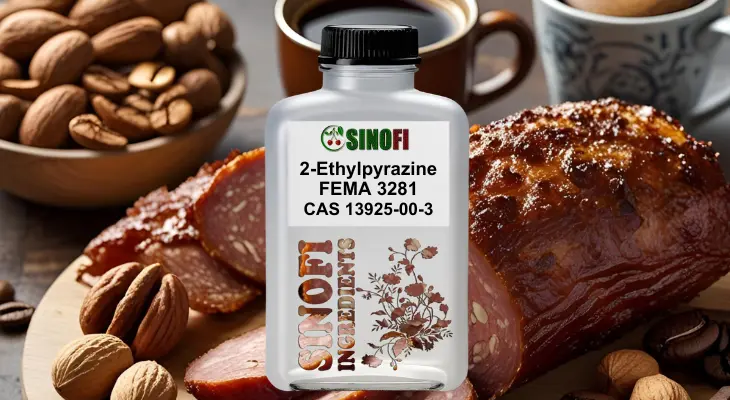
This section focuses on an overview of 2-ethylpyrazine as well as its manufacturing processes and uses. Also, please check out the introduction to 2-ethylpyrazine manufacturers, supply chain issues, 2-ethylpyrazine suppliers, and 2-ethylpyrazine prices. Sinofi can help you buy high-quality ethylpyrazine in bulk for your industry applications at wholesale prices based on FEMA 3281 and CAS 13925-00-3.
Table of Contents
What is 2-Ethylpyrazine?
2-Ethylpyrazine represents one of the fundamental aromatic compounds in the flavor formulation engineer’s palette, offering distinctive sensory characteristics that enhance both savory and sweet applications. As a member of the alkylpyrazine family, this heterocyclic compound plays a crucial role in recreating and enhancing roasted, nutty, and baked notes in contemporary flavor systems. 2-Ethylpyrazine consists of a six-membered aromatic ring containing two nitrogen atoms at positions 1 and 4, with an ethyl group substituted at position 2. This molecular structure contributes to its characteristic volatility and distinctive aromatic properties. According to the U.S. Food and Drug Administration (FDA), 2-ethylpyrazine is approved to be used in the food, flavour, and fragrance industries.
Regulatory Considerations
Regulatory bodies like EUR-Lex, EFSA, WHO, ECHACHEM, and JECFA have evaluated 2-ethylpyrazine for use in food applications and established it as Generally Recognized as Safe (GRAS) for its intended uses. This regulatory acceptance facilitates its incorporation into consumer products without extensive additional safety testing, reducing development time and costs for manufacturers. The compound’s well-documented safety profile extends to occupational exposure scenarios. When handled according to standard industrial hygiene practices, it presents minimal risks to workers involved in its production or use. The fragrance standard of this ingredient has been set by organizations such as IFRA.
Natural Occurrence
In nature, 2-ethylpyrazine forms through Maillard reactions between amino acids and reducing sugars during thermal processing of foods. This non-enzymatic browning reaction, fundamental to the development of cooked flavors, generates numerous pyrazines, including 2-ethylpyrazine. The compound occurs naturally in various roasted and baked products, including coffee, cocoa, roasted peanuts, baked bread, and cooked meats.
Sensory Profile and Characteristics
The sensory profile of 2-ethylpyrazine presents complex nuances that vary significantly with concentration. At lower levels, typically below 10 parts per million in finished products, it imparts subtle nutty and peanut-like characteristics with underlying earthy notes. As concentrations increase, the profile evolves to express more pronounced roasted and toasted qualities, eventually developing cocoa and coffee-like facets at higher usage levels. This concentration-dependent sensory behavior makes precise dosing critical for achieving desired flavor outcomes.
CAS No.: 13925-00-3
According to the American Chemical Society, the CAS number of 2-ethylpyrazine is 13925-00-3.
CAS Name: 2-Ethylpyrazine
Molecular Formula: C6H8N2
Molecular Mass: 108.14
Appearance: Colorless to light yellow, clear liquid
JECFA Number: 762
Boiling Point: 152.00 to 153.00 °C. @ 760.00 mm Hg
Solubility: Soluble in oils, alcohol, and organic solvents. Insoluble in water.
Other Names:
♦ Ethylpyrazine
♦ 2-Ethyl-1,4-diazine
♦ Pyrazine, ethyl-
♦ 2-ethyl pyrazine
♦ Pyrazine, 2-ethyl-
2-Ethylpyrazine Odor
At 1.00 % in dipropylene glycol, musty, nutty, buttery, and peanut.
FEMA Number 3281
According to the Flavor and Extract Manufacturers Association (FEMA), the 2-ethylpyrazine FEMA number is 3281.
Bulk 2-Ethylpyrazine Manufacturers
The global bulk 2-ethylpyrazine manufacturing sector represents a robust and growing market with diverse applications and strong fundamental drivers. Top 2-ethylpyrazine manufacturers like Sigma-Aldrich and Penta Fine Ingredients emphasize technical support, regulatory compliance, and supply chain reliability over pure cost competition. Their proximity to major end users in the flavor and fragrance industry provides logistics advantages for just-in-time delivery models. China has emerged as the dominant production hub, leveraging integrated supply chains, cost advantages, and growing technical capabilities. Chinese manufacturers often benefit from vertical integration, controlling multiple stages from precursor production through final product formulation.
Sinofi is a bulk 2-ethylpyrazine manufacturer in China, and we have a manufacturing facility with 2,500 square meters for the production of ethylpyrazine. We supply high-quality 2-ethylpyrazine at bulk prices and serve food, flavour, and fragrance manufacturers worldwide.
Manufacturing Process of 2-Ethylpyrazine
The manufacturing of 2-ethylpyrazine requires careful integration of chemical engineering principles, process control technology, and quality assurance systems.
Condensation Method
The most commercially viable route for 2-ethylpyrazine production involves the condensation reaction between ethylenediamine and appropriate dicarbonyl compounds. This method typically employs 2,3-butanedione (diacetyl) or its derivatives as the carbonyl source. The reaction proceeds through a nucleophilic addition mechanism followed by cyclization and dehydration steps.
The process begins with the controlled addition of ethylenediamine to a solution of the dicarbonyl compound under carefully regulated temperature conditions, typically ranging from 60 to 80 degrees Celsius. The reaction medium often consists of an alcoholic solvent such as ethanol or isopropanol, which facilitates both reactant solubility and product formation. Manufacturers must maintain precise stoichiometric ratios to minimize side product formation and maximize yield, which typically ranges from 65 to 75 percent under optimized conditions.
Modified Chichibabin Synthesis
An alternative manufacturing approach involves a modified version of the Chichibabin pyrazine synthesis. This method utilizes α-amino ketones or their equivalents as starting materials. The process requires heating the amino ketone precursors in the presence of dehydrating agents, leading to self-condensation and subsequent pyrazine ring formation.
While this method offers certain advantages in terms of atom economy, it presents challenges related to the availability and stability of the starting materials. Industrial implementation requires sophisticated temperature control systems and continuous monitoring to prevent decomposition of intermediates. The typical reaction temperature ranges from 150 to 200 degrees Celsius, necessitating specialized equipment capable of maintaining these conditions while ensuring worker safety.
Bulk 2-Ethylpyrazine Suppliers
The bulk 2-ethylpyrazine supply demonstrates considerable concentration, with manufacturing capabilities primarily distributed across Asia, North America, and Europe. Top 2-ethylpyrazine suppliers like Sigma-Aldrich and Penta Fine Ingredients have traditionally focused on high-purity grades suitable for food, flavour, and fragrance applications. Chinese 2-ethylpyrazine suppliers have emerged as dominant players in the global supply chain, leveraging economies of scale and integrated production facilities to offer competitive pricing for bulk quantities. They typically maintain production capacities ranging from several hundred to thousands of metric tons annually, serving both domestic and international markets.
Sinofi is a bulk 2-ethylpyrazine supplier in China, and we have a warehouse with 1,200 square meters for high-quality ethylpyrazine. We sell different grades of 2-ethylpyrazine at wholesale prices to food, flavour, and fragrance manufacturers.
Supply Chain of 2-Ethylpyrazine
The 2-ethylpyrazine supply chain exemplifies the complexity inherent in specialty chemical markets, where technical sophistication, regulatory compliance, and market responsiveness intersect.
Supply Chain Structure Overview
The chain begins with basic petrochemical feedstocks and progresses through multiple transformation stages before reaching end users in various industries.
Raw Material Sourcing
The production of 2-ethylpyrazine begins with readily available organic precursors, primarily ethylamine and glyoxal or their derivatives. These starting materials themselves represent the output of established chemical supply chains, creating interdependencies that can affect 2-ethylpyrazine availability and pricing.
Manufacturing and Production Networks
Manufacturing facilities for 2-ethylpyrazine are located in several global regions, each with distinct competitive advantages. China has emerged as the dominant production hub, leveraging integrated supply chains, cost advantages, and growing technical capabilities.
Distribution Channels and Logistics Infrastructure
The distribution of 2-ethylpyrazine follows multiple pathways depending on grade, volume, and end-use requirements. Direct sales from manufacturers to large end users represent the most straightforward channel, typically involving bulk shipments and long-term supply agreements. These relationships often include technical support and collaborative product development efforts. Specialty chemical distributors play a crucial role in serving smaller customers and providing regional market coverage.
Wholesale and Buy 2-Ethylpyrazine in Bulk
The successful procurement of 2-ethylpyrazine in bulk quantities requires a comprehensive approach that balances cost, quality, reliability, and regulatory compliance. 2-Ethylpyrazine buyers should develop robust supplier relationships and implement proper storage and handling procedures. Hence, they can ensure a steady supply while optimizing the total cost of ownership.
Supplier Evaluation and Selection Criteria
The evaluation of potential suppliers requires a systematic approach that goes beyond simple price comparisons. Manufacturing capabilities should be assessed through facility audits or third-party certifications for quality management systems.
Technical support capabilities often differentiate superior suppliers from merely adequate ones. The ability to provide detailed certificates of analysis, maintain consistent batch-to-batch quality, and offer technical guidance on storage and handling adds significant value to the procurement relationship.
As a bulk 2-ethylpyrazine manufacturer and supplier in China, we supply high-quality ethylpyrazine for food, flavour, and fragrance industries. We also wholesale 2-ethylpyrazine to small customers. Normally, they want to buy ethylpyrazine in small quantities. To serve them, we can wholesale 2-ethylpyrazine at bulk prices and provide a one-stop purchasing service.
2-Ethylpyrazine Prices (USD/Kg)
Food Grade 2-Ethylpyrazine Prices (GC Content >=99.0%)
| Volume | Unit Price | Shipment |
| 50g | 95 USD | Express |
| 500g | 470 USD | Express |
| 1Kg | 680 USD/Kg | Express |
| 20Kg | >20% cheaper | Express |
| 100Kg-Above | negotiable | Express / Sea |
The 2-ethylpyrazine market exhibits significant price differentiation based on product purity and application requirements.
Reagent grade represents the highest purity level, typically exceeding 99% purity, and commands premium pricing due to stringent quality requirements in research and analytical applications. Food and fragrance grades constitute the largest volume segment. These products undergo rigorous testing for contaminants and must comply with international food additive regulations, including FDA and EFSA standards. The pricing reflects both the quality requirements and the extensive regulatory compliance documentation required.
Furthermore, the above price quotations of 2-ethylpyrazine do not include the express shipping fee. The reason is that the shipment cost of ethylpyrazine may exceed the value of the sample. However, the bulk wholesale prices of 2-ethylpyrazine will be much lower than those of small orders. Please contact us for more details.
2-Ethylpyrazine Specification
| Appearance: | Colorless to light yellow, clear liquid |
| Odor: | Musty, nutty, buttery, peanut |
| Purity (GC) | >=99% |
| Refractive Index (20°C) | 1.493 – 1.501 |
2-Ethylpyrazine Uses
Applications in Food and Beverage
The food industry constitutes the largest consumer of 2-ethylpyrazine, where it serves as a crucial flavoring agent. This compound naturally occurs in various roasted and cooked foods, contributing to the characteristic nutty, roasted, and slightly earthy notes that consumers associate with high-quality food products. Food manufacturers incorporate 2-ethylpyrazine to enhance and replicate the complex flavor profiles found in roasted coffee, baked goods, and grilled meats.
In beverage production, 2-ethylpyrazine plays a particularly important role in creating authentic taste experiences. Coffee manufacturers utilize this compound to intensify the roasted characteristics of their products, especially in instant coffee formulations where natural roasting flavors may be diminished during processing. Similarly, producers of cocoa-based beverages employ 2-ethylpyrazine to enhance the depth and complexity of chocolate flavors, creating more satisfying sensory experiences for consumers.
The compound also finds extensive application in savory food products. Manufacturers of soups, sauces, and ready-to-eat meals incorporate 2-ethylpyrazine to impart meat-like flavors and enhance the overall umami profile of their products. This application has become increasingly important as the food industry responds to growing demand for plant-based alternatives that replicate the sensory characteristics of traditional meat products.
Applications in Fragrance and Cosmetics
The fragrance industry has recognized 2-ethylpyrazine as a valuable component for creating sophisticated scent profiles. Its distinctive aromatic properties contribute warm, nutty undertones that complement both masculine and unisex fragrance compositions. Perfumers appreciate its ability to add depth and complexity without overwhelming other fragrance notes, making it particularly useful in creating balanced, multi-layered scents.
In cosmetic formulations, the compound serves dual purposes. Beyond its aromatic contributions, it can mask undesirable odors from other active ingredients, improving the overall sensory appeal of products. This masking capability proves especially valuable in formulations containing functional ingredients with inherently unpleasant odors, such as certain vitamins or botanical extracts. The compound’s stability in various pH conditions and its compatibility with common cosmetic ingredients further enhance its utility in this sector.
Applications in Agricultural and Pest Management
Research has revealed interesting applications for 2-ethylpyrazine in agricultural settings, particularly in pest management strategies. Studies indicate that certain pyrazine compounds, including 2-ethylpyrazine, can function as semiochemicals that influence insect behavior. Agricultural researchers are exploring the potential of 2-ethylpyrazine as a component in environmentally friendly pest control systems, potentially reducing reliance on traditional pesticides.
Applications in Pharmaceutical
The pharmaceutical industry has shown increasing interest in pyrazine derivatives, including 2-ethylpyrazine, as potential building blocks for drug development. While 2-ethylpyrazine itself is not used as an active pharmaceutical ingredient, its chemical structure serves as a starting point for synthesizing more complex molecules with potential therapeutic applications. Researchers investigate pyrazine-based compounds for their antimicrobial, anti-inflammatory, and other biological activities, making 2-ethylpyrazine a valuable intermediate in pharmaceutical research.
2-Ethylpyrazine Benefits
Production Efficiency Benefits
From an economic perspective, 2-ethylpyrazine offers several advantages to manufacturers. The compound can be produced through various synthetic routes, allowing producers to optimize their manufacturing processes based on available resources and economic considerations. Additionally, its potency means that relatively small quantities can achieve the desired effect, improving cost-effectiveness in formulation development.
The compound’s stability translates to extended shelf life for both the raw material and finished products containing it. This stability reduces waste from degradation and minimizes the need for frequent quality adjustments, contributing to overall production efficiency. Manufacturers also benefit from the compound’s consistent quality when sourced from reputable suppliers, ensuring predictable performance in their applications.
Environmental Considerations
In an era of increasing environmental consciousness, 2-ethylpyrazine presents certain advantages from a sustainability perspective. Its biodegradability under appropriate conditions means that environmental accumulation concerns are minimal when the compound is used and disposed of properly. Furthermore, ongoing research explores bio-based production methods that could further reduce the environmental footprint associated with its manufacture.
2-Ethylpyrazine Used in Flavour and Fragrance
Successfully incorporating 2-ethylpyrazine into flavor formulations requires understanding its interactions with other components and environmental factors. The compound demonstrates notable synergistic effects when combined with other alkylpyrazines, particularly 2,3-dimethylpyrazine and 2,5-dimethylpyrazine, creating more complex and rounded nutty profiles than any single component alone. These combinations often appear in peanut butter, hazelnut, and almond flavor formulations where authenticity demands multiple facets of nuttiness.
Formulation Considerations and Interactions
pH sensitivity represents an important consideration, as 2-ethylpyrazine stability decreases in highly acidic environments below pH 3.5. This limitation requires careful formulation strategies in acidic applications, potentially involving encapsulation technologies or buffering systems to maintain stability throughout product shelf life. Temperature stability generally remains acceptable for most processing conditions, though prolonged exposure to temperatures exceeding 180°C can lead to degradation and off-note formation.
Matrix interactions significantly influence both the release kinetics and perceived intensity of 2-ethylpyrazine. In high-fat systems, the compound’s lipophilic nature results in partial sequestration, requiring adjusted usage levels compared to aqueous systems. Protein-rich matrices may also bind the compound, affecting its volatility and subsequent aroma release during consumption.
A Tobacco Flavouring
Includes the following ingredients (by weight):
Dandelion root extract, 0.8 parts; vicia faba flower tincture, 0.7 parts; maltol, 0.3 parts; beta-ionone, 0.02 parts; megastigmatrienone, 0.03 parts; anisyl alcohol, 0.6 parts; coffee furanone, 0.4 parts; benzyl alcohol, 0.5 parts; benzyl benzoate, 0.05 parts; 2,5-dimethylpyrazine, 0.002 parts; 2-ethylpyrazine, 0.002 parts; 2-acetylfuran, 0.02 parts; refined Yunnan tobacco product B, 2 parts; Yunnan tobacco cold extract, 60 parts; propylene glycol, 6 parts.
In conclusion, 2-ethylpyrazine stands as a testament to the importance of specialty chemicals in modern industry. Its diverse applications spanning food, fragrance, agriculture, and pharmaceutical sectors demonstrate the compound’s versatility and value. As a bulk ethylpyrazine manufacturer and supplier in China, we sell different grades of 2-ethylpyrazine at wholesale prices to large manufacturers and small customers worldwide.