




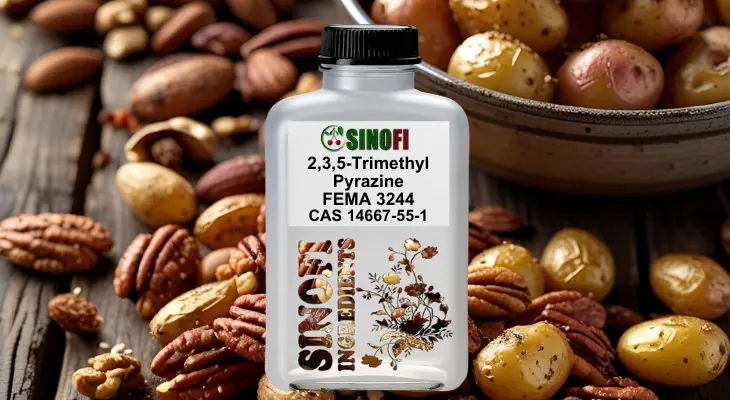
This section focuses on an overview of 2,3,5-trimethylpyrazine as well as its manufacturing processes and uses. Also, please check out the introduction to 2,3,5-trimethylpyrazine manufacturers, supply chain issues, 2,3,5-trimethylpyrazine suppliers, and 2,3,5-trimethylpyrazine prices. Sinofi can help you buy high-quality trimethylpyrazine in bulk for industry applications at wholesale prices based on FEMA 3244 and CAS 14667-55-1.
Table of Contents
What is 2,3,5-Trimethylpyrazine?
2,3,5-Trimethylpyrazine, also known as potato pyrazine, represents a significant compound in the flavor and fragrance industry, serving as a crucial ingredient in creating complex aroma profiles across various applications. It belongs to the pyrazine family and plays an essential role in developing roasted, nutty, and savory flavor characteristics that enhance consumer products worldwide. 2,3,5-Trimethylpyrazine features an aromatic ring containing three methyl groups attached at positions 2, 3, and 5, with two nitrogen atoms at positions 1 and 4. This specific arrangement of substituents creates unique chemical properties that distinguish it from other pyrazine derivatives. Its physical properties make it particularly suitable for flavor applications. It demonstrates good solubility in organic solvents such as ethanol and propylene glycol, which are commonly used carriers in flavor formulations. The compound’s relatively low vapor pressure ensures stability during storage while allowing for controlled release of aroma during product application. According to the U.S. Food and Drug Administration (FDA), 2,3,5-trimethylpyrazine is approved to be used in the food, flavour, and fragrance industries.
Regulatory Considerations
International regulatory frameworks like EUR-Lex, RIFM, ECHACHEM, EFSA, WHO, and JECFA have evaluated it for use in food and cosmetic applications, establishing acceptable use levels and specifications. In the United States, the FDA has approved its use as a flavoring agent, while the European Union includes it on its list of authorized flavoring substances. When formulating with 2,3,5-trimethylpyrazine, adherence to maximum usage levels remains critical. Typical application rates range from 0.5 to 50 ppm in finished products, depending on the specific application and desired flavor impact. Formulators must maintain detailed documentation of usage levels and ensure compliance with regional regulations governing flavoring substances. The fragrance standard of this ingredient has been set by organizations such as IFRA.

Sensory Characteristics
From an organoleptic perspective, 2,3,5-trimethylpyrazine delivers a distinctive sensory profile that flavor chemists value highly. The compound imparts roasted, nutty, and earthy notes with subtle hints of cocoa and baked goods. At appropriate dilutions, it contributes to the complexity of flavor systems by providing depth and richness that consumers associate with high-quality processed foods. The odor threshold of 2,3,5-trimethylpyrazine is remarkably low, typically ranging from 0.02 to 0.04 parts per billion in water, making it an exceptionally potent flavoring agent. This high impact allows formulators to achieve desired flavor effects with minimal usage levels, providing both economic and regulatory advantages in product development.
Natural Occurrence and Formation
In nature, 2,3,5-trimethylpyrazine forms through various pathways, most notably during the Maillard reaction between amino acids and reducing sugars under heat. This reaction explains the compound’s presence in roasted and baked products such as coffee, cocoa, roasted nuts, and baked bread. The compound has been identified in numerous food matrices, including roasted sesame seeds, French fries, and grilled meats, where it contributes to the characteristic aroma associated with thermal processing. Understanding these natural formation pathways enables flavor engineers to recreate authentic taste experiences in processed foods while maintaining clean label requirements. The compound’s occurrence in traditional foods also supports its regulatory acceptance and consumer familiarity with its sensory contributions.
CAS No.: 14667-55-1
According to the American Chemical Society, the CAS number of 2,3,5-trimethylpyrazine is 14667-55-1.
CAS Name: 2,3,5-Trimethylpyrazine
Molecular Formula: C7H10N2
Molecular Mass: 122.17
Appearance: Colorless to light yellow, clear liquid
JECFA Number: 774
Boiling Point: 171.00 to 172.00 °C. @ 760.00 mm Hg
Solubility: Completely soluble in oils, organic solvents. Slightly soluble in water.
Other Names:
♦ Pyrazine, 2,3,5-trimethyl-
♦ Pyrazine, trimethyl-
♦ 2,3,5-Trimethylpyrazine
♦ Trimethylpyrazine
2,3,5-Trimethylpyrazine Odor
Odor Strength: High, recommend smelling in a 0.01 % solution or less.
Substantivity: 21 hours at 0.05 % in alcohol.
At 0.01 % in dipropylene glycol. nutty nut skin, baked potato, roasted peanut, hazelnut musty.
FEMA Number 3244
According to the Flavor and Extract Manufacturers Association (FEMA), the 2,3,5-trimethylpyrazine FEMA number is 3244.
Bulk 2,3,5-Trimethylpyrazine Manufacturers
The global 2,3,5-trimethylpyrazine market features several established manufacturers offering various grades and specifications. Top 2,3,5-trimethylpyrazine manufacturers like Firmenich and Ernesto Ventos offer high-quality trimethylpyrazine products for food, flavor, and fragrance applications. Chinese trimethylpyrazine manufacturers currently control approximately 65-70% of global production capacity, benefiting from integrated supply chains, lower production costs, and established expertise in pyrazine chemistry.
Sinofi is a bulk 2,3,5-trimethylpyrazine manufacturer in China, and we have a manufacturing facility with 2,500 square meters for the production of trimethylpyrazine. We supply high-quality 2,3,5-trimethylpyrazine at bulk prices and serve food, flavour, and fragrance manufacturers worldwide.
Manufacturing Process of 2,3,5-Trimethylpyrazine
For 2,3,5-trimethylpyrazine synthesis, the reaction typically employs 2,3-butanedione (diacetyl) and 1,2-propanediamine as starting materials. The reaction mechanism involves initial nucleophilic attack by the diamine on one carbonyl group, followed by intramolecular cyclization and subsequent dehydration steps. The process requires careful pH control, typically maintained between 7.5 and 8.5, to optimize reaction kinetics while minimizing side product formation. The reaction is generally conducted in aqueous or alcoholic media at temperatures ranging from 60-90°C. Industrial processes often employ continuous flow reactors to maintain precise temperature control and ensure consistent product quality. Reaction times typically range from 4-8 hours, depending on the scale and specific conditions employed.
The manufacturing of 2,3,5-trimethylpyrazine represents a mature industrial process with well-established synthetic routes and purification methods. The condensation of α-dicarbonyl compounds with diamines remains the dominant production method due to its reliability, scalability, and economic advantages.
Bulk 2,3,5-Trimethylpyrazine Suppliers
The 2,3,5-trimethylpyrazine supply remains concentrated among established chemical manufacturers, with the Asia-Pacific region dominating production capacity. Top 2,3,5-trimethylpyrazine suppliers like Firmenich and Ernesto Ventos focus on high-purity grades suitable for pharmaceutical applications and premium food products. These suppliers typically command price premiums of 20-40% over Asian competitors, justified by stringent quality control systems and regulatory compliance capabilities.
Sinofi is a bulk 2,3,5-trimethylpyrazine supplier in China, and we have a warehouse with 1,200 square meters for high-quality trimethylpyrazine. We sell different grades of 2,3,5-trimethylpyrazine at wholesale prices to food, pharmaceutical, flavour, and fragrance manufacturers.
Supply Chain of 2,3,5-Trimethylpyrazine
The 2,3,5-trimethylpyrazine (TMP) supply chain represents a specialized segment within the broader pyrazine chemicals market. This compound, essential for food flavoring and fragrance applications, operates through a complex, multi-tiered supply chain structure that spans from basic chemical feedstock suppliers to end-use manufacturers in the food, beverage, and cosmetic industries.
Supply Chain Structure
Raw Material Suppliers
The foundation of the TMP supply chain rests on suppliers of 2-diaminopropane and 2,3-butanedione. These are the primary raw materials for TMP production.
TMP Manufacturers
These manufacturers employ different production strategies, ranging from traditional chemical synthesis to emerging biotechnological approaches using engineered microorganisms such as Bacillus amyloliquefaciens.
Distributors and Traders
The distribution network for TMP encompasses both regional and global players who bridge the gap between manufacturers and end users.
End Users
The final tier consists of companies that incorporate TMP into finished products:
Food and Beverage Manufacturers
The largest consumer segment utilizes TMP in products ranging from snack foods to beverages. Major applications include popcorn flavoring, roasted nut products, and coffee enhancement.
Fragrance and Cosmetics Companies
These firms incorporate TMP into perfumes, personal care products, and household fragrances to achieve specific olfactory profiles.
Pharmaceutical Companies
A smaller but growing segment is exploring TMP derivatives for potential therapeutic applications, particularly in neuroprotection and anti-inflammatory formulations.
Wholesale and Buy 2,3,5-Trimethylpyrazine in Bulk
Successful wholesale procurement of 2,3,5-trimethylpyrazine requires a comprehensive understanding of market dynamics, supplier capabilities, and strategic sourcing principles. Trimethylpyrazine buyers who develop robust supplier relationships, implement effective risk management strategies, and maintain focus on total value optimization will achieve sustainable competitive advantages in this specialized chemical market.
Procurement of 2,3,5-trimethylpyrazine demands strict adherence to quality specifications and regulatory requirements that vary significantly across application segments. Food-grade applications require compliance with FDA, EU, and other regional food additive regulations, necessitating comprehensive documentation including certificates of analysis, allergen statements, and manufacturing facility certifications.
Bulk Purchasing Strategies
Volume procurement of 2,3,5-trimethylpyrazine requires sophisticated contract structures that balance cost optimization with supply security. Annual agreements with quarterly delivery schedules provide cost predictability while accommodating demand fluctuations. Minimum order quantities typically range from 100 to 500 kilograms, with pricing advantages scaling significantly at tonnage levels.
As a bulk manufacturer and supplier of 2,3,5-trimethylpyrazine in China, we supply high-quality trimethylpyrazine for food, flavour, fragrance, and cosmetic industries. We also wholesale 2,3,5-trimethylpyrazine to small customers. Normally, they want to buy trimethylpyrazine in small quantities. To serve them, we can wholesale 2,3,5-trimethylpyrazine at bulk prices and provide a one-stop purchasing service.
2,3,5-Trimethylpyrazine Prices (USD/Kg)
Food Grade 2,3,5-Trimethylpyrazine Prices (FCC, GC Content >=99.0%)
| Volume | Unit Price | Shipment |
| 50g | 19 USD | Express |
| 500g | 95 USD | Express |
| 1Kg | 135 USD/Kg | Express |
| 20Kg | >20% cheaper | Express |
| 100Kg-Above | negotiable | Express / Sea |
The global 2,3,5-trimethylpyrazine prices continue to demonstrate steady growth driven by increasing demand from the food and beverage, fragrance, and pharmaceutical industries. Current market pricing for 2,3,5-trimethylpyrazine varies significantly based on purity levels, order quantities, and supplier specifications, with retail prices ranging from approximately $150-300 USD per kilogram for small quantities to more competitive rates for bulk industrial orders.
Furthermore, the above 2,3,5-trimethylpyrazine price quotations do not include the express shipping fee. The reason is that the shipment cost of trimethylpyrazine may exceed the value of the sample. However, the bulk wholesale prices of 2,3,5-trimethylpyrazine will be much lower than those of small orders. Please contact us for more details.
2,3,5-Trimethylpyrazine Specification
| Appearance: | Colorless to light yellow, clear liquid |
| Odor: | roasted nuts, roasted potatoes |
| Purity (GC) | >=99% |
| Refractive Index (25°C) | 1.500 – 1.509 |
| Moisture (%) | <=0.3 |
2,3,5-Trimethylpyrazine Uses
Applications in the Food and Beverage
The food and beverage sector represents one of the primary markets for 2,3,5-trimethylpyrazine, where it serves as a valuable flavoring agent. The compound naturally occurs in various roasted and cooked foods, contributing to their characteristic aromas and tastes. Its presence has been identified in coffee, cocoa, roasted nuts, baked goods, and grilled meats, where it contributes to the complex flavor profiles that consumers associate with these products.
In commercial food production, 2,3,5-trimethylpyrazine functions as a flavor enhancer and modifier. Food technologists utilize this compound to recreate or enhance nutty, roasted, and savory notes in processed foods. Its application extends to snack foods, where manufacturers seek to deliver authentic roasted flavors without extensive thermal processing. The compound’s effectiveness at low concentrations makes it economically attractive while ensuring that final products meet regulatory requirements for food additives.
The beverage industry similarly benefits from 2,3,5-trimethylpyrazine’s properties. Coffee substitutes and instant coffee products often incorporate this compound to enhance their roasted coffee character. Additionally, certain alcoholic beverages and flavor syrups utilize it to add depth and complexity to their flavor profiles.
Applications in the Fragrance and Cosmetics
The distinctive aromatic properties of 2,3,5-trimethylpyrazine have secured its position in the fragrance industry. Perfumers value this compound for its ability to impart warm, nutty, and slightly earthy notes to fragrance compositions. These characteristics make it particularly useful in creating masculine fragrances and in adding depth to oriental and woody fragrance families.
In fine fragrance creation, 2,3,5-trimethylpyrazine often serves as a middle or base note, providing longevity and complexity to the overall composition. Its compatibility with other fragrance materials allows perfumers to create sophisticated accords that evolve throughout the wearing experience. The compound’s stability ensures that fragrances maintain their intended character throughout their shelf life.
The cosmetics industry also employs 2,3,5-trimethylpyrazine in various products where a pleasant scent enhances the user experience. From body lotions to hair care products, the compound contributes to creating appealing sensory profiles that differentiate products in a competitive market. Its use must comply with international fragrance regulations, including those established by the International Fragrance Association (IFRA), ensuring consumer safety while delivering desired olfactory effects.
Applications in the Pharmaceutical and Biochemical
Beyond its sensory applications, 2,3,5-trimethylpyrazine has attracted interest from the pharmaceutical and biochemical research communities. Studies have investigated its potential biological activities, including antioxidant and anti-inflammatory properties. While research in this area continues to evolve, preliminary findings suggest that pyrazine derivatives, including 2,3,5-trimethylpyrazine, may offer therapeutic potential worthy of further investigation.
In pharmaceutical formulations, the compound may serve as an intermediate in the synthesis of more complex molecules. Its chemical structure provides reactive sites that synthetic chemists can exploit to create novel compounds with potential therapeutic applications. Additionally, its use as a flavoring agent in pharmaceutical preparations helps mask the unpleasant tastes of active ingredients, improving patient compliance with medication regimens.
The biochemical research community has also explored 2,3,5-trimethylpyrazine’s role in natural biological processes. Understanding how organisms produce and utilize this compound provides insights into metabolic pathways and may inform the development of biotechnological applications.
Industrial and Technical Applications
The industrial applications of 2,3,5-trimethylpyrazine extend beyond consumer products into technical fields. In analytical chemistry, the compound serves as a reference standard for identifying and quantifying pyrazine compounds in complex mixtures. Quality control laboratories in the food and fragrance industries rely on such standards to ensure product consistency and regulatory compliance.
2,3,5-Trimethylpyrazine Benefits
2,3,5-Trimethylpyrazine stands as a testament to the successful translation of naturally occurring compounds into valuable commercial ingredients. Its diverse applications across food, fragrance, and emerging pharmaceutical sectors demonstrate its versatility and benefits in modern industry. The compound’s favorable safety profile, combined with its distinctive sensory properties, ensures its continued relevance in product development and innovation. As research continues to uncover new potential applications and production methods become more refined, 2,3,5-trimethylpyrazine will likely maintain its position as a crucial ingredient in creating products that enhance human sensory experiences.
2,3,5-Trimethylpyrazine Used in Flavour and Fragrance
Successful incorporation of 2,3,5-trimethylpyrazine into flavor systems requires understanding its interactions with other components. The compound exhibits excellent compatibility with other pyrazines, creating synergistic effects that enhance overall flavor complexity. When combined with furanones and lactones, it contributes to rich, creamy, and indulgent flavor profiles, particularly valued in confectionery applications.
Encapsulation technologies offer advantages for controlling release profiles and protecting the compound during processing. Spray drying with appropriate carriers maintains stability while facilitating uniform distribution in dry blend applications. In liquid systems, pre-dilution in approved solvents ensures homogeneous incorporation and prevents localized concentration effects that could lead to off-notes.
Stability and Shelf Life Considerations
The stability profile of 2,3,5-trimethylpyrazine under various storage conditions influences formulation decisions and product shelf life. The compound demonstrates excellent stability when stored in sealed containers away from light and excessive heat. Oxidative degradation remains minimal under normal storage conditions, though exposure to strong oxidizing agents should be avoided.
In finished products, stability depends largely on the matrix composition and processing conditions. Acidic environments generally enhance stability, while alkaline conditions may accelerate degradation. Interaction with packaging materials requires consideration, particularly for long shelf life products where migration and scalping phenomena could affect flavor delivery over time.
As consumer preferences continue evolving toward more complex and authentic taste experiences, the strategic use of this compound will remain central to innovative flavor development. Success in formulation requires balancing its powerful sensory impact with complementary ingredients while considering processing conditions and regulatory requirements. For flavor formulation engineers, mastering the application of 2,3,5-trimethylpyrazine represents an essential competency in creating products that meet contemporary market demands while delivering memorable sensory experiences.
An E-cigarette Liquid with Burnt Sugar Flavor
Includes the following ingredients (by weight):
1 part burnt sweet flavoring; 1.5 parts original tobacco flavoring; 0.3 parts nicotine; 0.1 parts WS-23 cooling agent; 2 parts propylene glycol; and 5 parts glycerol.
The burnt sweet flavor includes the following ingredients:
1.5 parts burnt sweet flavor, 0.1 part furfural, 2 parts 3-methylcyclopentane-1,2-dione, 0.2 parts maltol, 3 parts ethyl maltol, 0.07 parts vanillin, 0.15 parts ethyl vanillin, 0.25 parts 2,5-dimethylpyrazine, 0.1 parts 2,3,5-trimethylpyrazine, 0.01 parts gamma-nonalactone, 0.1 parts furanone, 0.3 parts alpha-angelica lactone, 0.1 parts hexadecanoic acid, and 4 parts propylene glycol.
The original tobacco flavor includes the following ingredients:
1 part Yunyan tobacco absolute oil, 1 part Burley tobacco absolute oil, 0.75 part Virginia absolute oil, 0.01 part guaiacol, 0.005 part 4-vinylguaiacol, 0.01 part tree moss absolute oil, 0.02 part methylcyclopentenolone, 0.01 part gamma-heptyl lactone, 0.007 part 2-acetylpyridine, 0.004 part 2,3,5-trimethylpyrazine, 0.02 part megastigmatrienone, 0.02 part 2-propyl-4-methyl-1,3-dioxolane, 0.04 part benzyl alcohol, 0.2 part ethanol, and 4 parts propylene glycol.
In conclusion, 2,3,5-trimethylpyrazine stands as a cornerstone ingredient in modern flavor formulation, offering unique sensory properties combined with practical advantages in stability and regulatory acceptance. As a bulk trimethylpyrazine manufacturer and supplier in China, we sell different grades of 2,3,5-trimethylpyrazine at wholesale prices to large manufacturers and small customers worldwide.