




This section provides an overview of 2,3-diethylpyrazine (shoyu pyrazine), covering its manufacturing processes, applications, and regulatory status. Also, please check out the introduction to 2,3-diethylpyrazine manufacturers, supply chain issues, 2,3-diethylpyrazine suppliers, and 2,3-diethylpyrazine prices. Sinofi can help you buy high-quality 2,3-diethylpyrazine in bulk for industry applications at wholesale prices based on FEMA 3136 and CAS 15707-24-1.
Table of Contents
What is 2,3-Diethylpyrazine (Shoyu Pyrazine)?
2,3-Diethylpyrazine, commonly known as shoyu pyrazine due to its characteristic presence in soy sauce, represents a significant aromatic compound in the flavour and fragrance industry. It plays a crucial role in creating authentic savory flavour profiles, particularly in Asian cuisine applications and processed food products. 2,3-Diethylpyrazine consists of a six-membered pyrazine ring with two ethyl groups attached at the 2 and 3 positions. This symmetric substitution pattern contributes to its unique sensory properties. According to the U.S. Food and Drug Administration (FDA), 2,3-diethylpyrazine is approved to be used in the food, flavour, and fragrance industries.
Regulatory Considerations and Safety
Regulatory bodies, including JECFA, EFSA, RIFM, EUR-Lex, and WHO, have affirmed the safety profile of 2,3-diethylpyrazine in food, flavour, and fragrance applications when used at appropriate levels. In the United States, it appears on the FEMA GRAS list (FEMA number 3136), permitting its use in food flavouring. The European Union similarly allows its use as a flavouring substance under Regulation (EC) No 1334/2008. Manufacturers must ensure compliance with maximum use levels specified in various jurisdictions, which typically range from 10 to 50 parts per million in finished food products, depending on the application category. Flavour engineers should note regional regulatory variations and maintain documentation of usage levels to ensure compliance and quality assurance. The fragrance standard of shoyu pyrazine has been set by organizations such as IFRA.
Natural Occurrence
While 2,3-diethylpyrazine can be synthesized for commercial use, it occurs naturally through Maillard reactions during the fermentation and aging of soy sauce, where it contributes significantly to the characteristic aroma profile. The compound forms through the interaction of amino acids and reducing sugars under specific temperature and pH conditions during the brewing process. Beyond soy sauce, this pyrazine has been identified in various thermally processed foods, including roasted coffee, cocoa products, baked goods, and grilled meats. The formation pathways typically involve the condensation of α-aminoketones or through Strecker degradation products, with the specific precursors and reaction conditions determining the final concentration in the food matrix.
Sensory Characteristics
2,3-Diethylpyrazine delivers a distinctive sensory profile characterized by roasted, nutty, and earthy notes with underlying hints of cocoa and coffee. At low concentrations, typically in the range of 0.1 to 10 parts per million in finished products, it imparts a pleasant roasted grain character reminiscent of toasted sesame seeds or roasted barley. The compound’s odor threshold in water has been reported at approximately 0.04 parts per billion, demonstrating its exceptional potency as a flavouring agent. The flavour profile becomes more complex at varying concentrations, with lower levels contributing subtle background notes that enhance umami perception, while higher concentrations can provide more pronounced roasted and slightly burnt characteristics. This concentration-dependent behavior makes precise dosing critical in formulation work.
CAS No.: 15707-24-1
According to the American Chemical Society, the CAS number of 2,3-diethylpyrazine is 15707-24-1.
CAS Name: 2,3-Diethylpyrazine
Molecular Formula: C8H12N2
Molecular Mass: 136.19
Appearance: Colorless to light yellow, clear liquid
JECFA Number: 771
Boiling Point: 180.00 to 182.00 °C. @ 760.00 mm Hg
Solubility: Soluble in alcohol, organic solvents. Soluble in water (4458 mg/L @ 25 °C).
Other Names:
♦ Shoyu Pyrazine
♦ Pyrazine, 2,3-diethyl-
♦ 2,3-Diethyl-pyrazine
2,3-Diethylpyrazine Odor
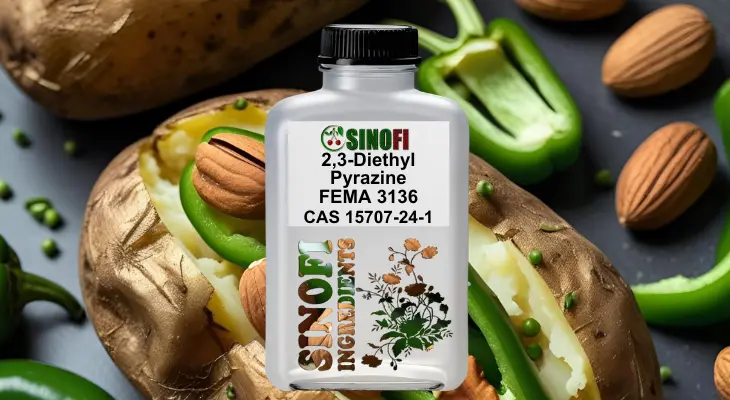
At 0.10 % in dipropylene glycol. raw nutty, green pepper, baked potato odour
FEMA Number 3136
According to the Flavour and Extract Manufacturers Association (FEMA), the 2,3-diethylpyrazine FEMA number is 3136.
Bulk 2,3-Diethylpyrazine Manufacturers
The bulk 2,3-diethylpyrazine manufacturing exemplifies the specialized nature of flavour and fragrance chemical production, combining technical complexity with stringent regulatory requirements. Top 2,3-diethylpyrazine manufacturers like Ventos and Sigma-Aldrich have developed integrated supply chains encompassing raw material sourcing, synthesis, purification, and distribution networks capable of serving multinational flavour and fragrance houses. Chinese shoyu pyrazine manufacturers have emerged as significant players in recent years, leveraging cost advantages and expanding technical capabilities to capture market share in both domestic and export markets.
Sinofi is a bulk 2,3-diethylpyrazine manufacturer in China, and we have a manufacturing facility with 2,500 square meters for the production of shoyu pyrazine. We supply high-quality 2,3-diethylpyrazine at bulk prices and serve global clients in the food, flavour, and fragrance sectors.
Manufacturing Process of 2,3-Diethylpyrazine
The manufacturing of 2,3-diethylpyrazine requires integration of organic synthesis principles, process engineering expertise, and quality assurance protocols.
Primary Manufacturing Routes
Maillard Reaction Pathway
The most industrially relevant synthesis involves controlled Maillard reactions between appropriate amino acid precursors and reducing sugars. This process typically employs alanine or other suitable amino compounds in combination with glucose or fructose under elevated temperatures ranging from 120-180°C. The reaction proceeds through complex intermediate formations, including Schiff bases and Amadori compounds, ultimately yielding the desired pyrazine structure through cyclization and dehydration mechanisms.
The process requires careful temperature control and reaction time optimization to maximize yield while minimizing unwanted byproduct formation. Typical reaction times range from 2-6 hours, depending on temperature selection and catalyst presence. pH adjustment to slightly alkaline conditions often enhances reaction efficiency and selectivity toward the target compound.
Direct Condensation Method
An alternative synthetic approach involves the condensation of 2,3-butanedione with ethylenediamine under controlled conditions. This method offers advantages in terms of reaction predictability and reduced byproduct complexity. The process typically operates at temperatures between 80-120°C in the presence of suitable dehydrating agents or catalysts.
The condensation reaction proceeds through initial nucleophilic attack of the diamine on the dicarbonyl compound, followed by cyclization and elimination of water molecules. Reaction monitoring through gas chromatography ensures optimal conversion while preventing overreaction that could lead to decomposition products.
Bulk 2,3-Diethylpyrazine Suppliers
The bulk 2,3-diethylpyrazine supply demonstrates characteristic features of specialty chemical markets, with production concentrated among established chemical manufacturers. Top 2,3-diethylpyrazine suppliers like Ventos and Sigma-Aldrich offer varying scales of production and technical support capabilities. Regional distribution patterns favour Asia-Pacific markets, particularly China and India, where expanding food processing capabilities drive increasing demand.
Sinofi is a bulk 2,3-diethylpyrazine supplier in China, and we have a warehouse with 1,200 square meters for high-quality shoyu pyrazine. We sell different grades of 2,3-diethylpyrazine at wholesale prices to food, flavour, and fragrance manufacturers.
Supply Chain of 2,3-Diethylpyrazine
The 2,3-diethylpyrazine supply chain represents a specialized segment within the broader specialty chemicals industry, characterized by limited suppliers serving specific end-user markets through carefully managed distribution networks.
Supply Chain Structure
Upstream Raw Materials
The supply chain for 2,3-diethylpyrazine begins with basic chemical precursors used in pyrazine synthesis. The manufacturing process typically involves the condensation of appropriate diketones with ammonia or other nitrogen-containing compounds, followed by cyclization and purification steps. Raw material availability and pricing volatility represent significant factors affecting the supply chain.
Manufacturing and Production
The production of 2,3-diethylpyrazine requires specialized chemical synthesis capabilities and quality control systems to ensure product purity and consistency. Manufacturing operations are typically concentrated among a limited number of specialty chemical producers who possess the technical expertise and regulatory compliance capabilities necessary for this type of compound.
Distribution Channels
The distribution network for 2,3-diethylpyrazine follows a multi-tiered structure designed to serve specialized end-user markets。
Direct Sales
Large-volume customers, particularly major food and fragrance manufacturers, often purchase directly from producers to ensure supply security and competitive pricing.
Specialty Distributors
Regional distributors specializing in flavour and fragrance ingredients serve medium-sized customers and provide technical support services.
Trading Companies
International trading companies facilitate cross-border transactions and provide logistics support for global supply chains.
End-User Industries and Applications
Food and Beverage Industry
The food and beverage sector represents the primary end-user market for 2,3-diethylpyrazine.
Fragrance Industry
The fragrance industry utilizes 2,3-diethylpyrazine for specific scent profiles requiring earthy or nutty notes. Applications include personal care products, household fragrances, and industrial applications where these specific olfactory characteristics are desired.
Research and Development
Academic and industrial research organizations represent an important but smaller market segment, using 2,3-diethylpyrazine for studies.
Wholesale and Buy 2,3-Diethylpyrazine in Bulk
Strategic procurement of 2,3-diethylpyrazine through wholesale and bulk purchasing approaches offers significant advantages for food and fragrance manufacturers. Success requires careful attention to shoyu pyrazine supplier evaluation, regulatory compliance, quality assurance, and cost optimization while building sustainable supplier relationships. By implementing comprehensive procurement strategies that address these multiple dimensions, 2,3-diethylpyrazine buyers can secure a reliable, cost-effective supply of this critical flavour ingredient while supporting broader organizational objectives for quality and profitability.
Strategic Advantages of Wholesale and Bulk Procurement
Implementing a wholesale purchasing strategy for 2,3-diethylpyrazine offers significant operational and financial benefits. Volume purchasing typically results in substantial cost reductions per unit, with many suppliers offering tiered pricing structures that reward larger order quantities. These economies of scale become particularly advantageous when dealing with specialty chemicals, where smaller quantities often carry premium pricing. Bulk procurement also provides enhanced supply chain security through reduced ordering frequency and improved inventory buffer against potential supply disruptions. Given the specialized nature of flavour compound manufacturing, establishing relationships with reliable suppliers through consistent bulk orders helps ensure priority treatment during periods of high demand or raw material shortages.
Critical Evaluation Criteria for Supplier Selection
When evaluating potential suppliers for 2,3-diethylpyrazine, purchasing managers must assess multiple factors beyond basic pricing considerations. Regulatory compliance represents the primary concern, as suppliers must demonstrate adherence to relevant food safety standards, including FDA regulations, European Union food additive directives, and other applicable regional requirements.
Quality consistency proves equally important, particularly given the potent nature of this flavour compound, where slight variations can significantly impact end product characteristics. Suppliers should provide comprehensive certificates of analysis, demonstrate robust quality control processes, and maintain appropriate analytical capabilities for ongoing product verification.
As a bulk 2,3-diethylpyrazine manufacturer and supplier in China, we supply high-quality shoyu pyrazine for food, flavour, and fragrance industries. We also wholesale shoyu pyrazine to small customers. Normally, they want to buy 2,3-diethylpyrazine in small quantities. To serve them, we can wholesale 2,3-diethylpyrazine at bulk prices and provide a one-stop purchasing service.
2,3-Diethylpyrazine Prices (USD/Kg)
Food Grade 2,3-Diethylpyrazine Prices (GC Content >=99.0%)
| Volume | Unit Price | Shipment |
| 50g | 95 USD | Express |
| 500g | 475 USD | Express |
| 1Kg | 678 USD/Kg | Express |
| 20Kg | >20% cheaper | Express |
| 100Kg-Above | negotiable | Express / Sea |
The 2,3-diethylpyrazine prices are expected to remain stable with modest increases driven by general inflation and raw material cost pressures. Demand should remain steady but limited, with price growth estimated at 2-4% annually. Current pricing reflects the compound’s specialized applications and production constraints, with future price trends likely to follow general cost inflation rather than dramatic market expansion.
Furthermore, the above price quotations of 2,3-diethylpyrazine do not include the express shipping fee. The reason is that the shipment cost of shoyu pyrazine may exceed the value of the sample. However, the bulk wholesale prices of 2,3-diethylpyrazine will be much lower than those of small orders. Please contact us for more details.
2,3-Diethylpyrazine Specification
| Appearance: | Colorless to light yellow, clear liquid |
| Odor: | Nutty, earthy, strong baked potato odour. |
| Purity (GC) | >=99% |
| Refractive Index (20°C) | 1.492 – 1.509 |
2,3-Diethylpyrazine Uses
2,3-Diethylpyrazine demonstrates significant commercial value across multiple industries, with its primary strength lying in flavour and fragrance applications.
Primary Applications in Flavour and Fragrance Industry
The predominant commercial application of 2,3-diethylpyrazine centers on its role as a flavouring agent in the food and beverage industry. This compound contributes distinctive nutty, roasted, and earthy flavour notes that prove particularly valuable in creating authentic taste profiles for various food products. Manufacturers commonly incorporate 2,3-diethylpyrazine into coffee flavouring systems, where it enhances the characteristic roasted coffee aroma and taste. The compound also finds extensive use in chocolate and cocoa flavouring applications, contributing to the complex flavour matrix that defines quality confectionery products.
Beyond coffee and chocolate applications, 2,3-diethylpyrazine serves as a key component in savory flavouring systems. Food technologists utilize this compound to develop meat flavours, particularly those requiring roasted or grilled characteristics. The compound’s ability to provide depth and complexity makes it valuable in creating flavouring solutions for snack foods, seasonings, and processed meat products.
Fragrance and Cosmetic Applications
The fragrance industry recognizes 2,3-diethylpyrazine for its contribution to complex scent compositions. Perfumers incorporate this compound into fragrances that require earthy, nutty, or roasted notes, particularly in masculine fragrance lines and niche compositions seeking distinctive character. The compound’s relatively stable chemical properties make it suitable for various cosmetic formulations where long-lasting scent delivery is essential.
Industrial and Chemical Manufacturing Applications
Beyond consumer applications, 2,3-diethylpyrazine serves important functions in industrial chemical processes. The compound acts as an intermediate in the synthesis of more complex organic molecules, particularly in pharmaceutical and agricultural chemical manufacturing. Research facilities utilize 2,3-diethylpyrazine as a starting material for developing new compounds with potential therapeutic or agricultural applications.
The chemical industry also employs this compound in the production of specialty chemicals and advanced materials. Its unique molecular structure makes it valuable for creating polymer additives and specialty solvents where specific chemical properties are required.
2,3-Diethylpyrazine Benefits
Antimicrobial and Biodegradation Benefits
Research has identified bacterial strains capable of utilizing pyrazine compounds, including related derivatives, as carbon and energy sources. This biodegradation capability suggests potential applications in environmental remediation and waste treatment processes. Pyrazines also exhibit various biological activities, including bactericidal properties and potential chemoprotective effects.
2,3-Diethylpyrazine Used in Flavour and Fragrance
2,3-Diethylpyrazine represents a significant component in the modern flavour and fragrance industry, offering unique sensory properties that have made it invaluable for creating complex aromatic profiles. This pyrazine derivative has gained prominence not only for its distinctive organoleptic properties but also for its versatility in various application matrices, from food products to fine fragrances. The compound’s ability to contribute to both flavour and fragrance compositions makes it a valuable tool in the formulation engineer’s arsenal.
Formulation Considerations and Technical Guidelines
When incorporating 2,3-diethylpyrazine into formulations, several technical considerations must be addressed to ensure optimal performance and stability. The compound’s high potency requires precise measurement and handling procedures to prevent overdosing, which can result in undesirable harsh or medicinal off-notes.
Solubility characteristics of 2,3-diethylpyrazine favor oil-based systems, though it can be successfully incorporated into aqueous applications with appropriate solubilization techniques. In oil-based flavour systems, the compound typically shows excellent stability and compatibility with other flavour components. Aqueous applications may require the use of emulsifiers or co-solvents to achieve uniform distribution and prevent separation during storage.
Storage stability of formulations containing 2,3-diethylpyrazine is generally excellent when proper precautions are observed. The compound shows good resistance to oxidation and thermal degradation under normal storage conditions. However, exposure to strong light or elevated temperatures for extended periods should be avoided to maintain optimal sensory properties.
Interaction with other flavour components requires careful consideration during formulation development. 2,3-Diethylpyrazine can exhibit synergistic effects with other pyrazine compounds, potentially leading to unexpectedly intense results. Conversely, certain aldehydes and esters may mask or modify the compound’s characteristic notes, requiring adjustment of usage levels to maintain the desired flavour balance.
A Baked Potato Flavouring
Include the following ingredients (by weight, %):
2,3,5-Trimethylpyrazine, 0.4; 2,3-Dimethylpyrazine, 0.4; 2-Ethyl-3,5-Dimethylpyrazine, 0.3; Phenylacetaldehyde, 0.2; 2,4-Decadienal, 0.15; 2-Methylpyrazine, 0.15; 2-Acetylpyrazine, 0.05; 2,3,5,6-Tetramethylpyrazine, 0.05; 2-Ethyl-3-Methylpyrazine, 0.08; 2-Acetylfuran, 0.15; Isovaleraldehyde, 0.1; 3-Methylthiopropionaldehyde, 0.15; Vanillin, 0.03; Furfural, 0.1; 2 ,3-Diethyl-5-Methylpyrazine, 0.03; Hexanal, 0.05; Trans-2-Heptenal, 0.04; Trans-2-Decenal, 0.05; Trans-2-Octenal, 0.04; 2-Isobutyl-3-Methylpyrazine, 0.02; Heptaldehyde, 0.03; 2,3-Diethylpyrazine, 0.02; Reaction Solution, 20; Roasted Potato Extract Oil, 77.41.
The reaction solution is prepared as follows:
D-Xylose, 1 part; Glucose, 1 part; Arginine, 1.5 parts; Methionine, 0.5 parts; Proline, 0.5 parts; Water, 50 parts; Soybean oil, 50 parts, where the total mass of reducing sugars is equal to the total mass of amino acids. After weighing the raw materials according to the formula, a Maillard reaction is carried out at a temperature of 100-150°C for 1-3 hours. After the reaction is complete, the aqueous layer is discarded, and the oil layer is collected to obtain the reaction solution.
The roasted potato extract oil is prepared as follows:
Slice potatoes, soak in clean water for 10-30 minutes, wrap in tin foil, and bake in an oven at 180-250°C for 30-80 minutes. Remove the slices and soak in soybean oil for 8-24 hours, with the amount of soybean oil being 5-10 times the weight of the potato slices. This produces the baked potato extract oil.
The production method comprises the following steps:
Measure the monomeric flavouring ingredients according to the recipe and mix them evenly at room temperature (10-30°C) to produce the finished baked potato flavour.
In conclusion, 2,3-diethylpyrazine represents a versatile and valuable tool for flavour and fragrance formulation engineers. Its unique combination of potent sensory properties, excellent stability, and favorable regulatory status makes it suitable for a wide range of applications across multiple product categories. As a bulk 2,3-diethylpyrazine manufacturer and supplier in China, we sell different grades of shoyu pyrazine at wholesale prices to large manufacturers and small customers worldwide.