




This section focuses on an overview of 2,3,5,6-tetramethylpyrazine (ligustrazine) as well as its manufacturing processes and uses. Also, please check out the introduction to tetramethylpyrazine manufacturers, supply chain issues, tetramethylpyrazine suppliers, and tetramethylpyrazine prices. Sinofi can help you buy high-quality ligustrazine in bulk for industry applications at wholesale prices based on FEMA 3237 and CAS 1124-11-4.
Table of Contents
What is 2,3,5,6-Tetramethylpyrazine (Ligustrazine)?
2,3,5,6-Tetramethylpyrazine, also known as ligustrazine, is a bioactive alkaloid compound originally isolated from the traditional Chinese medicinal herb Ligusticum chuanxiong (Szechuan lovage). It represents one of the most significant pyrazine compounds in the flavor and fragrance industry. This heterocyclic compound plays a crucial role in creating authentic nutty, roasted, and cocoa-like flavor profiles in both natural and synthetic applications. Its unique sensory characteristics and relatively low odor threshold make it an invaluable tool in the flavor formulator’s palette. Ligustrazine consists of a six-membered aromatic ring containing two nitrogen atoms at positions 1 and 4, with methyl groups attached at all four remaining carbon positions (2, 3, 5, and 6). This highly symmetrical structure contributes to its stability and distinctive organoleptic properties. The compound has garnered significant interest in pharmaceutical research due to its diverse therapeutic properties and potential clinical applications. According to the U.S. Food and Drug Administration (FDA), 2,3,5,6-tetramethylpyrazine is approved to be used in the food, pharmaceutical, flavour, and fragrance industries.
Regulatory Considerations
International regulatory frameworks like EUR-Lex, ECHACHEM, EFSA, WHO, and JECFA have evaluated 2,3,5,6-tetramethylpyrazine for use in food and cosmetic applications, establishing acceptable use levels and specifications. It holds GRAS (Generally Recognized As Safe) status in the United States under FEMA number 3237, permitting its use in food flavorings. The European Union similarly approves its use as a flavouring substance under the Implementing Regulation 872/2012. The JECFA has evaluated the compound and established it as safe for use in foods at current levels of intake. The fragrance standard of this ingredient has been set by organizations such as IFRA.
Natural Occurrence
2,3,5,6-Tetramethylpyrazine occurs naturally in Ligusticum chuanxiong, and is also found in liquor, soy products, coffee, dairy products, and other products. It is a key contributor to the characteristic aromas of roasted coffee, cocoa, roasted sesame seeds, and various toasted grains. The compound has been identified in concentrations ranging from 0.5 to 50 ppm in roasted coffee, depending on the roasting conditions and bean variety. Fermented products represent another significant source of natural tetramethylpyrazine. Traditional fermented soy products, particularly natto and certain types of soy sauce, contain substantial amounts of this compound, generated through bacterial metabolism. Some Bacillus species produce tetramethylpyrazine as a secondary metabolite, contributing to the distinctive umami and nutty notes in these foods. Additionally, the compound has been detected in aged cheeses, fermented fish products, and certain alcoholic beverages, where it develops through complex biochemical pathways involving amino acid degradation and subsequent condensation reactions.
Sensory Characteristics and Flavor Applications
From an organoleptic perspective, 2,3,5,6-tetramethylpyrazine exhibits a complex flavor profile characterized predominantly by nutty, roasted, and cocoa-like notes. At lower concentrations (0.5-5 ppm), it imparts pleasant coffee, chocolate, and hazelnut nuances. As concentrations increase (5-20 ppm), earthy and musty undertones become more pronounced, which can be either desirable or problematic depending on the application context. It also contributes to umami perception and can enhance the overall depth and complexity of savory formulations. The compound exhibits a relatively high odor threshold, requiring careful dosage considerations during formulation.
In practical flavor formulation, tetramethylpyrazine serves multiple functions across various application categories. In chocolate and cocoa applications, it reinforces the natural cocoa notes and can help standardize products made from beans of varying quality or origin. Coffee flavors benefit from its addition to enhance roasted characteristics and provide a fuller body to instant coffee products. Nut flavors, particularly hazelnut, peanut, and almond variants, utilize tetramethylpyrazine to amplify authentic roasted notes that might otherwise be lacking in processed products.
The compound finds extensive use in savory applications as well. Meat flavors, especially those targeting grilled or roasted profiles, incorporate tetramethylpyrazine to enhance the Maillard reaction notes that develop during cooking. In vegetarian and vegan applications, it serves as a crucial component for creating convincing meat-like flavors, often working synergistically with other pyrazines and sulfur compounds to achieve authentic profiles. Tetramethylpyrazine demonstrates notable synergy with other pyrazines, particularly 2,3-dimethylpyrazine and 2,5-dimethylpyrazine, creating more complex and authentic roasted profiles. Combinations with furans, thiazoles, and certain sulfur compounds can enhance specific flavor directions, from coffee and chocolate to meat and savory applications.
CAS No.: 1124-11-4
According to the American Chemical Society, the CAS number of 2,3,5,6-tetramethylpyrazine is 1124-11-4.
CAS Name: Tetramethylpyrazine
Molecular Formula: C8H12N2
Molecular Mass: 136.19
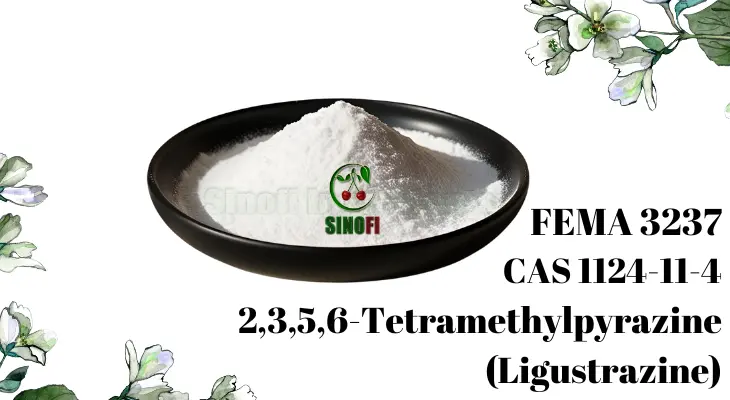
Appearance: White crystalline powder
JECFA Number: 780
Boiling Point: 190.00 °C. @ 760.00 mm Hg
Solubility: Soluble in oils, alcohol, and organic solvents. Slightly soluble in water (7007 mg/L @ 25 °C).
Other Names:
♦ Pyrazine, 2,3,5,6-tetramethyl-
♦ Pyrazine, tetramethyl-
♦ Tetramethylpyrazine
♦ BS factor
♦ Ligustrazine
♦ Tetrapyrazine
♦ Chuanxingzine
♦ Ligustrazin
Tetramethylpyrazine Odor
At 10.00 % in dipropylene glycol. nutty musty chocolate coffee cocoa brown lard burnt.
FEMA Number 3237
According to the Flavor and Extract Manufacturers Association (FEMA), the 2,3,5,6-tetramethylpyrazine FEMA number is 3237.
Bulk Tetramethylpyrazine Manufacturers
The bulk 2,3,5,6-tetramethylpyrazine manufacturing sector represents a dynamic and growing market segment within the specialty chemicals industry. Top 2,3,5,6-tetramethylpyrazine manufacturers like Givaudan and Firmenich offer high-purity grades for research and industrial applications. Chinese ligustrazine manufacturers have established a particularly strong presence in the global market. The concentration of manufacturing capabilities in China reflects the country’s advantages in raw material access, production infrastructure, and proximity to key Asian markets.
Sinofi is a bulk 2,3,5,6-tetramethylpyrazine manufacturer in China, and we have a manufacturing facility with 2,500 square meters for the production of ligustrazine. We supply high-quality 2,3,5,6-tetramethylpyrazine at bulk prices and serve food, pharmaceutical, flavour, and fragrance manufacturers worldwide.
Manufacturing Process of Tetramethylpyrazine (Ligustrazine)
The manufacturing landscape for 2,3,5,6-tetramethylpyrazine has evolved significantly with advances in both synthetic and biotechnological production methods. There are three methods for synthesizing 2,3,5,6-tetramethylpyrazine.
Traditional Extraction
This traditional pathway involves harvesting Ligusticum plants, processing the rhizomes, and extracting the active compound. While this method produces pharmaceutical-grade material, the extraction of natural ligustrazine is costly, inefficient, and unsustainable.
Biotechnological Production
The most promising pathway involves microbial fermentation by Bacillus subtilis. Biosynthesis primarily uses glucose as the raw material and produces a natural product. This bio-based approach utilizes renewable feedstocks including cane molasses, corn starch, potato starch, cassava starch, and tapioca flour.
Chemical Synthesis
The synthetic method for 2,3,5,6-tetramethylpyrazine is characterized by a one-pot synthesis of 2,3,5,6-tetramethylpyrazine using industrial phosphoric acid, ammonia, and acetoin as raw materials. Specifically, the method comprises the following steps:
- Add 120 kg (1.04 mol) of industrial phosphoric acid (85%) and 600 kg of process water to a reactor and stir thoroughly after addition.
- Maintain the temperature between 20 and 40°C, introduce ammonia gas into the flask, and measure the system until the pH is less than 7. Stop at 8.8-8.2.
- Control the temperature at 30-40°C and add 60 kg (0.68 mol) of acetoin dropwise over approximately 30 minutes. After completion, maintain the reaction for 2 hours.
- Raise the temperature to 90-100°C and allow to react for 1 hour.
- Perform heating and distillation. Distillate is normally produced at 100°C. When the temperature reaches 103°C, distillation is complete, yielding a distillate.
- Add a small amount of phosphoric acid to the distillate to adjust the pH to 6-7, then cool to 0-5°C and allow to stand for at least 4 hours. Filter the mixture to yield crude 2,3,5,6-tetramethylpyrazine as a white needle-like solid.
- Return the filtrate from step 7 to the reactor, pass ammonia through the reaction mixture, and then recycle the reaction.
- Recrystallize 45 kg of the crude product with 200 kg of water to obtain a wet product. Vacuum dry the product for 2-4 hours.
Bulk Tetramethylpyrazine Suppliers
The tetramethylpyrazine supply landscape encompasses a diverse range of companies, from specialized chemical manufacturers to major multinational corporations. Top 2,3,5,6-tetramethylpyrazine suppliers, including Givaudan and Firmenich, offer food, perfumery, and pharmaceutical grades of ligustrazine with comprehensive documentation and regulatory compliance.
Sinofi is a bulk 2,3,5,6-tetramethylpyrazine supplier in China, and we have a warehouse with 1,200 square meters for high-quality ligustrazine. We sell different grades of 2,3,5,6-tetramethylpyrazine at wholesale prices to food, pharmaceutical, flavour, and fragrance manufacturers.
Supply Chain of Tetramethylpyrazine (Ligustrazine)
The 2,3,5,6-tetramethylpyrazine supply chain represents a sophisticated network balancing traditional extraction methods with modern biotechnological production. As market demand continues expanding across pharmaceutical, food, and cosmetic applications, supply chain participants must adapt to evolving regulatory requirements, sustainability expectations, and quality standards.
Supply Chain Structure Overview
The 2,3,5,6-tetramethylpyrazine supply chain operates through three primary production pathways, each serving different market segments with distinct quality requirements and cost structures.
Raw Material Sources
The supply chain begins with three distinct production approaches that determine the subsequent distribution pathways.
Manufacturing and Processing
The manufacturing tier transforms raw materials or intermediates into market-ready products. Advanced fermentation techniques have enabled manufacturers to optimize production efficiency.
Distribution Networks
The distribution network splits into specialized channels serving distinct end markets.
Pharmaceutical Distribution
This pathway serves traditional Chinese medicine manufacturers and pharmaceutical companies developing cardiovascular treatments.
Food and Beverage Distribution
This compound has an aroma threshold and is of great industrial importance in beverages, baked goods, meat products, and frozen dairy products.
Cosmetic and Fragrance Distribution
The cosmetic industry utilizes tetramethylpyrazine for its aromatic properties, with specialized distributors serving this niche market segment.
Wholesale and Buy Tetramethylpyrazine in Bulk
Successful tetramethylpyrazine procurement requires a coordinated approach between purchasing, quality assurance, and end-user departments. Clear specification development should address purity requirements, packaging preferences, delivery schedules, and quality documentation needs. Budget planning should account for potential price fluctuations while maintaining adequate inventory levels to support production requirements. Regular review of market conditions and supplier capabilities enables timely adjustments to procurement strategies.
The strategic procurement of 2,3,5,6-tetramethylpyrazine offers significant value creation opportunities for organizations operating in pharmaceutical, food, and specialty chemical markets. Through careful supplier selection, strategic volume planning, and comprehensive quality assurance programs, purchasing managers can secure reliable access to this valuable compound while optimizing total cost of ownership and supporting business growth objectives.
Strategic Supplier Evaluation Criteria
Successful bulk procurement of ligustrazine requires a comprehensive supplier assessment across multiple dimensions. Quality assurance represents the primary consideration, with suppliers requiring demonstrated capability to deliver consistent purity levels through validated analytical methods, including gas chromatography and high-performance liquid chromatography.
Regulatory compliance forms another critical evaluation criterion. Suppliers must maintain appropriate certifications for target markets, including kosher certification for food applications and pharmaceutical-grade manufacturing standards where applicable. Documentation requirements include certificates of analysis, material safety data sheets, and regulatory filing support for end-use applications.
Bulk Purchasing Optimization Strategies
Volume-based procurement strategies can deliver substantial cost advantages for tetramethylpyrazine purchases. Inventory management considerations include the compound’s excellent stability profile under recommended storage conditions, enabling strategic stockpiling during favorable pricing periods. However, purchasers should balance inventory carrying costs against potential price volatility and supplier lead time requirements. Contract negotiation opportunities exist for establishing long-term supply agreements with preferred suppliers. Such arrangements can secure favorable pricing terms while ensuring supply continuity for ongoing manufacturing operations. Annual volume commitments often unlock additional pricing concessions and priority allocation during periods of high demand.
As a bulk tetramethylpyrazine manufacturer and supplier in China, we supply high-quality ligustrazine for food, pharmaceutical, flavour, and fragrance industries. We also wholesale 2,3,5,6-tetramethylpyrazine to small customers. Normally, they want to buy ligustrazine in small quantities. To serve them, we can wholesale 2,3,5,6-tetramethylpyrazine at bulk prices and provide a one-stop purchasing service.
Tetramethylpyrazine Prices (USD/Kg)
Food Grade Tetramethylpyrazine Prices
(GC Content >=99.0%)
| Volume | Unit Price | Shipment |
| 50g | 20 USD | Express |
| 500g | 100 USD | Express |
| 1Kg | 148 USD/Kg | Express |
| 20Kg | >20% cheaper | Express |
| 100Kg-Above | negotiable | Express / Sea |
Natural Type Tetramethylpyrazine Prices
(GC Content >=99.0%)
| Volume | Unit Price | Shipment |
| 50g | 96 USD | Express |
| 500g | 476 USD | Express |
| 1Kg | 680 USD/Kg | Express |
| 20Kg | >20% cheaper | Express |
| 100Kg-Above | negotiable | Express / Sea |
The 2,3,5,6-tetramethylpyrazine market operates on a tiered pricing structure based on purity levels and application-specific grades. The compound is categorized into three primary market grades: Food Grade, Flavour and Fragrance Grade, and Pharmaceutical Grade, each commanding different price points based on purity requirements and regulatory compliance standards. Manufacturers and buyers should monitor regulatory developments, supply chain stability, and technological advances in production methods as key factors that will shape future pricing trends in this specialized chemical market.
Furthermore, the above price quotations of 2,3,5,6-tetramethylpyrazine do not include the express shipping fee. The reason is that the shipment cost of ligustrazine may exceed the value of the sample. However, the bulk tetramethylpyrazine wholesale prices will be much lower than those of small orders. Please contact us for more details.
2,3,5,6-Tetramethylpyrazine Specification
| Appearance: | White crystalline powder |
| Odor: | Musty, fermented, and coffee-like aroma |
| Purity (GC) | >=99% |
| Melting Point (25°C) | 85.0 – 90.0 |
Tetramethylpyrazine (Ligustrazine) Uses
Food and Beverage Applications
Coffee and Beverage Flavors
2,3,5,6-Tetramethylpyrazine serves as a cornerstone ingredient in coffee flavor formulations, where it contributes essential roasted notes that define authentic coffee character. Typical usage levels range from 0.1 to 2.0 parts per million, depending on the desired intensity and the presence of other roasted notes in the formulation. The compound proves particularly effective in instant coffee flavoring, where it helps bridge the sensory gap between fresh-brewed and reconstituted products. In specialty coffee flavors, it enables the creation of distinct roast profiles, from light city roasts to dark French roasts.
Bakery and Confectionery Applications
In bakery flavor systems, 2,3,5,6-tetramethylpyrazine enhances the perception of baked goods’ authenticity. It works synergistically with vanilla, butter flavors, and caramel notes to create comprehensive baked goods profiles. Applications include cake mixes, cookie flavors, bread improvers, and breakfast cereal seasonings. Confectionery applications leverage the compound’s chocolate-enhancing properties, where it deepens cocoa flavors and adds complexity to chocolate formulations. The compound proves especially valuable in white chocolate applications, where it can introduce subtle roasted notes without compromising the delicate milk flavor profile.
Savory Food Systems
The compound finds extensive use in savory applications, particularly in meat flavoring systems where it contributes to grilled and roasted meat profiles. It enhances the perception of protein-rich foods and works effectively in vegetarian and plant-based meat alternatives to create more convincing meaty flavors. Snack food applications utilize 2,3,5,6-tetramethylpyrazine in cheese flavors, where it contributes to aged cheese characteristics, and in nut-flavored products, where it reinforces natural nutty notes and adds depth to the overall flavor profile.
Fragrance Applications
Fine Fragrance Compositions
In fine fragrance, 2,3,5,6-tetramethylpyrazine serves as a unique middle note ingredient that adds warmth and gourmand characteristics to compositions. Perfumers utilize their coffee-like and nutty facets to create distinctive olfactory signatures in oriental and gourmand fragrance families. The compound blends particularly well with vanilla, tonka bean, and chocolate notes, creating sophisticated gourmand accords. Its moderate tenacity allows it to bridge top and base notes effectively, contributing to the overall harmony of complex fragrance compositions.
Functional Fragrance Applications
In functional fragrance applications, including personal care products and home fragrances, 2,3,5,6-tetramethylpyrazine contributes warmth and comfort associations. Its use in coffee-scented candles and room fragrances capitalizes on the positive emotional responses associated with coffee aromas.
The compound’s stability in various formulation matrices makes it suitable for incorporation into detergents, fabric softeners, and air fresheners, where it provides a lasting aromatic impact and enhances consumer acceptance.
Pharmaceutical Applications
In pharmaceutical development, ligustrazine has attracted considerable research attention for its potential therapeutic properties. Studies have investigated its cardiovascular benefits, including its ability to improve blood circulation and potentially reduce blood pressure. The compound has also been examined for its neuroprotective properties and potential applications in treating cerebrovascular disorders. Traditional Chinese medicine has historically used ligustrazine-containing herbs, and modern pharmaceutical research continues to explore standardized formulations for clinical applications. However, regulatory approval processes vary by jurisdiction, and therapeutic uses require proper medical oversight.
Cosmetic and Personal Care Applications
The cosmetic industry incorporates tetramethylpyrazine into various formulations for its antioxidant properties and potential skin benefits. Personal care manufacturers utilize the compound in anti-aging products, where its purported ability to improve microcirculation may contribute to enhanced skin appearance and health.
Chemical Manufacturing
Tetramethylpyrazine serves as an important intermediate in chemical synthesis processes. Manufacturers use it as a building block for creating more complex organic compounds and as a precursor in the production of specialty chemicals for various industrial applications.
Tetramethylpyrazine (Ligustrazine) Benefits
Cardiovascular Health Benefits
Improved Blood Circulation
Research has consistently demonstrated tetramethylpyrazine’s ability to enhance cardiovascular function through multiple mechanisms. The compound exhibits significant vasodilatory properties, promoting improved blood flow throughout the circulatory system. Studies indicate that tetramethylpyrazine can reduce peripheral vascular resistance and enhance microcirculation, particularly beneficial for individuals with compromised cardiovascular health.
Antiplatelet Activity
Tetramethylpyrazine demonstrates notable antiplatelet aggregation effects, reducing the tendency of blood platelets to clump together. This mechanism helps prevent the formation of blood clots that could lead to thrombotic events such as heart attacks or strokes. The compound appears to inhibit platelet activation through modulation of calcium channels and reduction of thromboxane A2 production.
Blood Pressure Regulation
Clinical investigations have shown that tetramethylpyrazine may contribute to blood pressure regulation through its effects on vascular smooth muscle relaxation and endothelial function. The compound appears to enhance nitric oxide bioavailability, leading to improved vascular tone and reduced arterial stiffness.
Neuroprotective Benefits
Cerebral Protection
Tetramethylpyrazine exhibits significant neuroprotective effects, particularly in protecting against ischemic brain injury. Research indicates that the compound can reduce neuronal damage following stroke by improving cerebral blood flow and reducing oxidative stress in brain tissue. These protective mechanisms make tetramethylpyrazine a compound of interest for neurovascular health management.
Cognitive Function Support
Studies suggest that tetramethylpyrazine may support cognitive function through enhanced cerebral circulation and neuroprotective mechanisms. The compound appears to facilitate better oxygen and nutrient delivery to brain tissue, potentially supporting memory formation and cognitive processing.
Anti-Inflammatory and Antioxidant Effects
Tetramethylpyrazine demonstrates considerable anti-inflammatory activity through inhibition of key inflammatory mediators and pathways. The compound can reduce the production of pro-inflammatory cytokines and decrease the activation of inflammatory signaling cascades. Additionally, tetramethylpyrazine exhibits antioxidant properties, helping to neutralize harmful free radicals and reduce oxidative stress throughout the body.
Metabolic Health Benefits
Diabetes Management
Research has explored tetramethylpyrazine’s potential role in diabetes management, with studies indicating possible benefits for glucose metabolism and insulin sensitivity. The compound may help improve cellular glucose uptake and reduce complications associated with diabetic vascular damage.
Liver Protection
Tetramethylpyrazine has shown hepatoprotective properties in various research models, demonstrating the ability to protect liver tissue from damage caused by toxins, ischemia, and inflammatory processes. These effects appear to result from the compound’s antioxidant and anti-inflammatory mechanisms.
Tetramethylpyrazine Used in Flavour and Fragrance
Success in utilizing this compound requires understanding its sensory characteristics, proper formulation techniques, and appropriate usage levels. As consumer preferences continue evolving toward more sophisticated and authentic sensory experiences, 2,3,5,6-tetramethylpyrazine will likely maintain its position as a key ingredient in innovative flavor and fragrance development. For formulation engineers, mastering the application of this compound opens opportunities to create distinctive products that meet the increasingly discerning expectations of today’s consumers while maintaining the technical performance standards required for commercial success.
Solubility and Compatibility
2,3,5,6-Tetramethylpyrazine demonstrates moderate solubility in both polar and non-polar solvents, facilitating its incorporation into diverse formulation systems. In aqueous systems, the compound requires careful solubilization strategies, often involving the use of co-solvents or emulsification techniques. The compound shows excellent compatibility with most common flavoring materials and fragrance ingredients. However, formulation chemists should consider potential interactions with highly basic materials, which may affect the compound’s stability and sensory characteristics over extended storage periods.
Stability and Storage
Proper storage conditions are essential for maintaining the quality and potency of 2,3,5,6-tetramethylpyrazine. The compound should be stored in tightly sealed containers away from direct light and heat sources. Under appropriate storage conditions, the material maintains its sensory characteristics for extended periods without significant degradation. Temperature fluctuations can affect the compound’s volatility and may lead to concentration changes in finished products. Climate-controlled storage facilities represent the optimal storage environment for maintaining consistent quality parameters.
Formulation Considerations
When incorporating tetramethylpyrazine into flavor systems, several technical factors require consideration. The compound’s volatility necessitates careful attention to processing temperatures and encapsulation methods for applications requiring extended shelf life. In spray-dried flavors, losses during processing can be minimized through appropriate carrier selection and optimized inlet/outlet temperatures. Liquid flavor systems benefit from the addition of fixatives such as benzyl benzoate or triethyl citrate to reduce volatility and extend flavor persistence.
pH stability studies indicate that tetramethylpyrazine remains stable across a wide pH range (3-9), making it suitable for diverse food matrices. However, prolonged exposure to highly acidic conditions (pH < 3) at elevated temperatures can lead to gradual degradation. The compound exhibits good stability toward oxidation under normal storage conditions, though exposure to light and elevated temperatures should be minimized to prevent color changes and flavor deterioration. Synergistic effects with other flavor compounds represent an important consideration in formulation work.
A Roasted Lamb Flavour Using 2,3,5,6-Tetramethylpyrazine
Includes the following ingredients (by weight):
12-Methyltridecanal, 0.4%; 3-Acetylthio-2-Methylfuran, 0.2%; 4-Methyloctanoic Acid, 0.5%; Hexanoic Acid, 0.29%; Gamma-Undecalactone, 2%; Benzyl Alcohol, 0.04%; 2-Acetylpyrrole, 1%; Furanone, 0.6%; 4-Methylguaiacol, 1%; Octanoic Acid, 1.5%; 2-Methyltetrahydrofuran-3-Thiol, 0.1%; Decanoic Acid, 0.57%; 2-Methyl-3-Furanthiol, 0.6%; 5-Methylfurfural, 1%; Eugenol, 0.35%; 2,4-Heptadienal, 1.5%; Trimethylpyrazine, 0.05%; 2-Ethyl-3,(5 or 6)-Dimethylpyrazine, 3%; 1-Octen-3-Ol, 0.06%; 3-Methylthiopropanol, 1%; Glacial Acetic Acid, 0.08%; 2,4-Decadienal, 1%; Tetramethylpyrazine, 0.1%; Butyl-Decanoyl Lactone, 2%; 2-Acetylfuran, 1%; 2-Pyrazinylethanethiol, 0.04%; Benzaldehyde, 1%; Dodecanoic Acid, 0.2%; 2-Acetylpyrazine, 0.05%; Tetradecanoic Acid, 0.2%; 2-Acetylthiazole, 0.05%; Hexadecanoic Acid, 0.2%; Methyl (2-Methyl-3-Furyl) Disulfide, 2%; Caprylic/Capric Triglyceride, 76.32%.
In conclusion, 2,3,5,6-tetramethylpyrazine represents a promising natural compound with demonstrated benefits across food, pharmaceutical, flavour, and fragrance industries. As a bulk ligustrazine manufacturer and supplier in China, we sell different grades of 2,3,5,6-tetramethylpyrazine at wholesale prices to large manufacturers and small customers worldwide.